
The bee man
Farmers learn beekeeping
As in many regions of Ethiopia, numerous families in the Kawo Koysha project area keep their own bee colonies. However, their traditional beekeeping methods yield little income and are dangerous. Menschen für Menschen organizes multi-day beekeeping trainings in which farmers further develop their skills – enabling them to soon supplement their income with liquid gold.
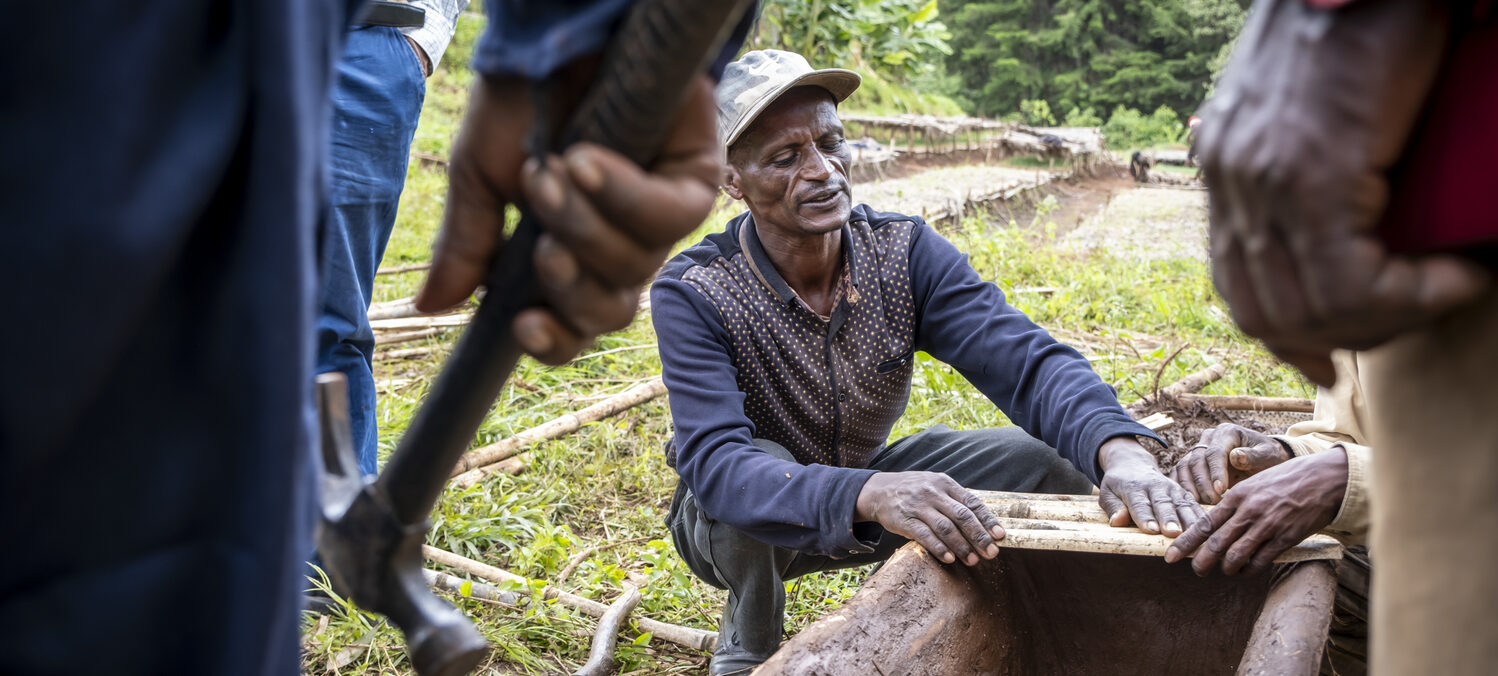
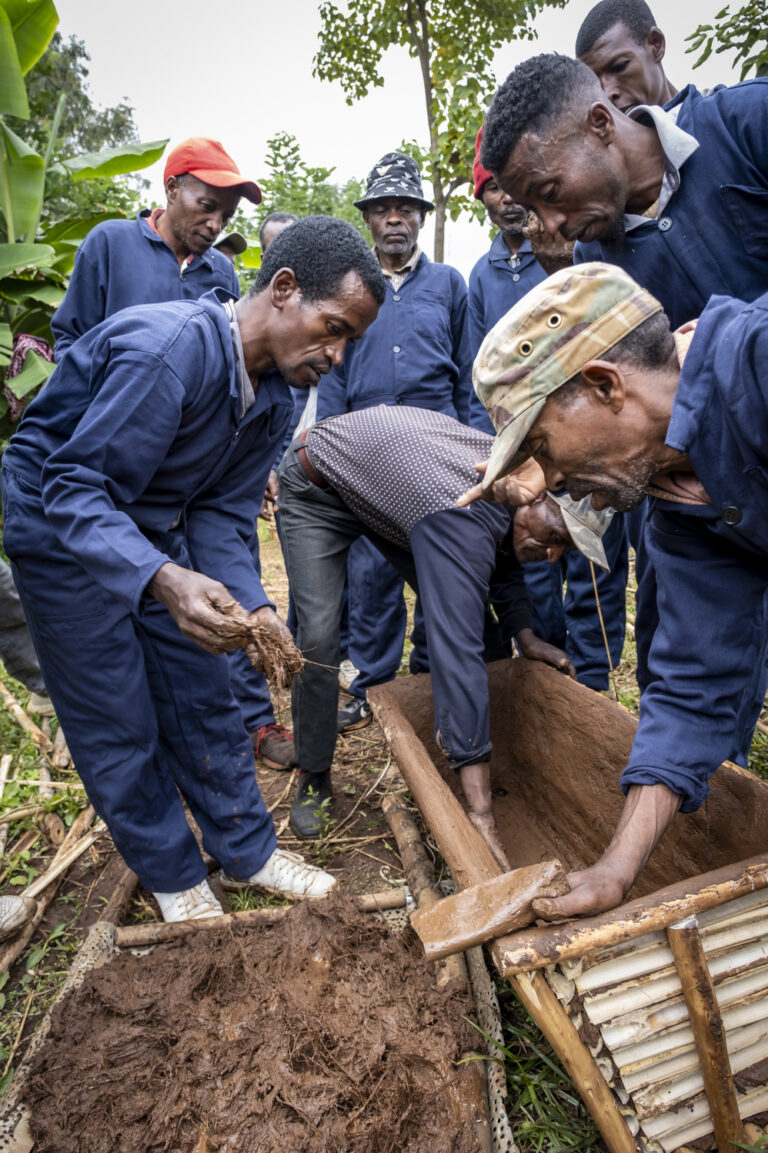
Ermias Ero boldly grabs the muddy earth beneath his feet and spreads it on the inside of the box made of bamboo sticks in front of him in the grass. He fills the gaps between the sticks with the brown mixture. “Spread it evenly,” one of the men beside him, also wearing a blue work jacket like Ermias, reminds him. “Our bees should feel comfortable in there.” Together with 13 other men, they had assembled the boxes the day before as part of a ten-day beekeeping training organized for them by Menschen für Menschen. In the workshop, the farmers also learned how to keep the boxes clean, protect the bees from birds and lizards, and move the queen safely along with the entire colony.
The course builds on Ethiopia’s millennia-old beekeeping tradition. With an estimated five million hives and an annual honey production of more than 55,000 tons, the country is one of the world’s largest honey producers. The honey is exported, but it is also primarily used for the national production of the honey wine, Tej. For many farmers, beekeeping is an important source of income, even though their yields are usually low: their traditional beehives, basket tubes, or hollowed-out tree trunks, which are hung high in the treetops, yield only a few kilograms of honey. They can also only be used once, as they are destroyed during honey extraction. Farmers often get stung repeatedly or even fall while carrying out the dangerous harvest at great heights.
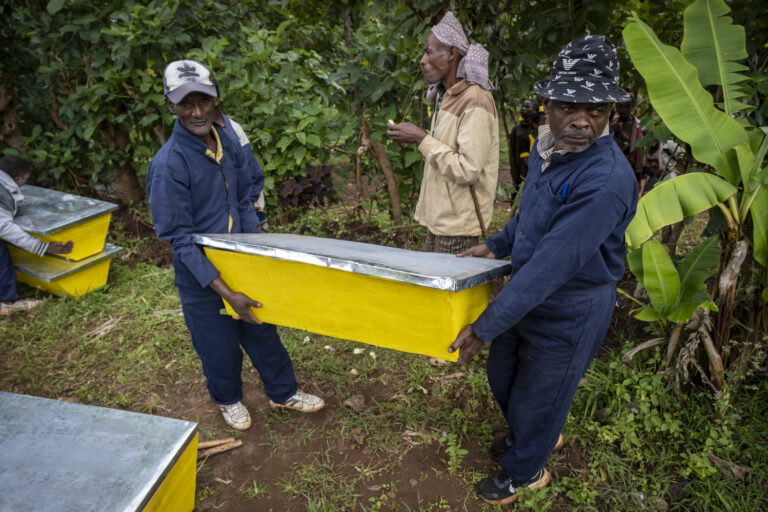
To make honey production safer and more profitable, Menschen für Menschen offers beekeeping training in the project areas and equips farmers with modern beehives from which individual honeycombs can be removed. These hives yield 20 kilograms of honey or more per harvest and are reusable. The bamboo boxes are a simplified version of these modern hives.
Knowledge and resources
When employees of the Menschen für Menschen foundation were looking for suitable farmers in the Kawo Koysha communities, their choice quickly fell on Ermias. Beekeeping runs in the 31-year-old’s family. His grandfather had his own bee colonies, as did his father. “Unfortunately, he died too early to teach me,” says Ermias. “Honestly, I didn’t really know what I was doing until now.” The quality of his honey was inconsistent. The byproduct, fine beeswax, was thrown away carelessly – he didn’t know it could fetch a good price. On top of that, Ermias and other farmers in the area were victims of thieves: “They came at night, drove the bees away with smoke, destroyed the hives, and took my honey,” he recalls.
During the last harvest, Ermias produced four kilograms of honey from his remaining three hives. He sold it for 1,000 birr, roughly 17 euros. This is almost the only income for the father, who lives with his wife and five children in the community of Zemo. The couple grows corn, sweet potatoes, cassava, teff, ethiopian bananas, beans, and a small amount of coffee. They sell only a small portion of their harvest and use the rest for themselves. They also share part of it with Ermias’ mother. “Being able to finally earn more money for my family through beekeeping will completely change our lives,” says Ermias.
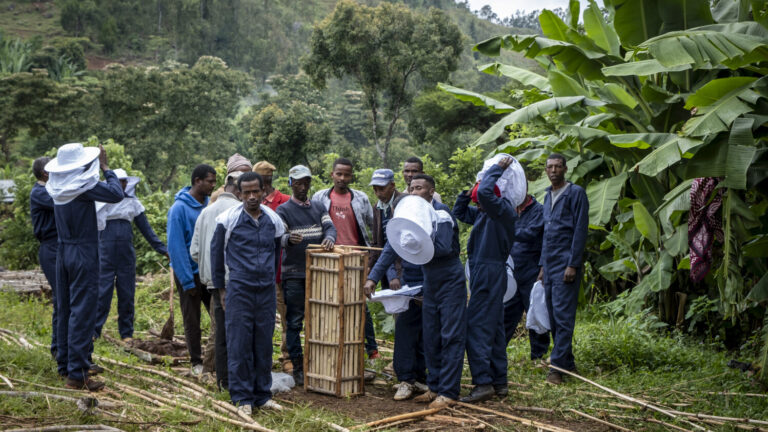
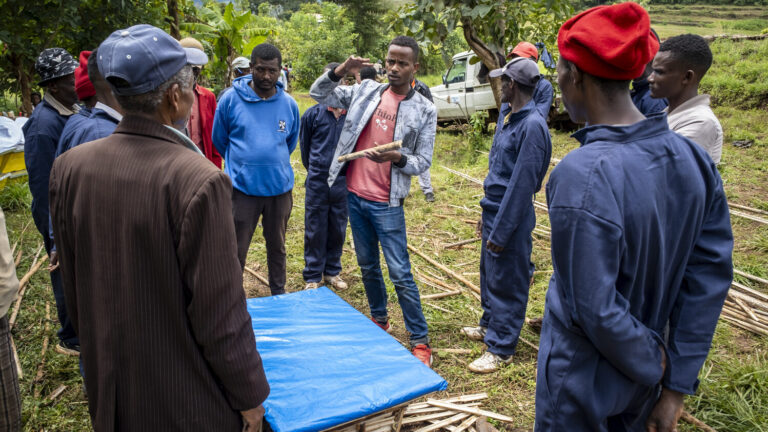
The last day of the beekeeping training is nearly over. “Remember, once the mud has dried, you need to add a layer of cow dung,” says trainer Ayele Bekele. “It provides good insulation for the hives and keeps parasites away.” Ayele is one of two staff members from the local agricultural office leading the workshop. In addition to selecting the participants, Menschen für Menschen also arranges their transportation to the foundation’s tree nursery, where the beekeeping course takes place. Each of the men receives safety equipment consisting of a beekeeper’s hat and overalls, as well as two modern beehives as a starter set.
Model farmers as role models for others
Ermias and the other farmers are expected, in the hopes of Menschen für Menschen, to become so-called model farmers in their communities. Over the coming weeks, the foundation’s development consultans will closely guide them through the next steps in beekeeping. The farmers will also receive avocado, papaya, and coffee seedlings, improved vegetable seeds, and training in agroforestry. “When their neighbors see their successes, they will want to work with us too,” explains project leader Zerihun Gezahegn. The community members learn from each other. “I had to manage without my father’s knowledge,” says Ermias. “That makes it all the more important that I now share what I know with my children and the entire village.”