
Money from the field
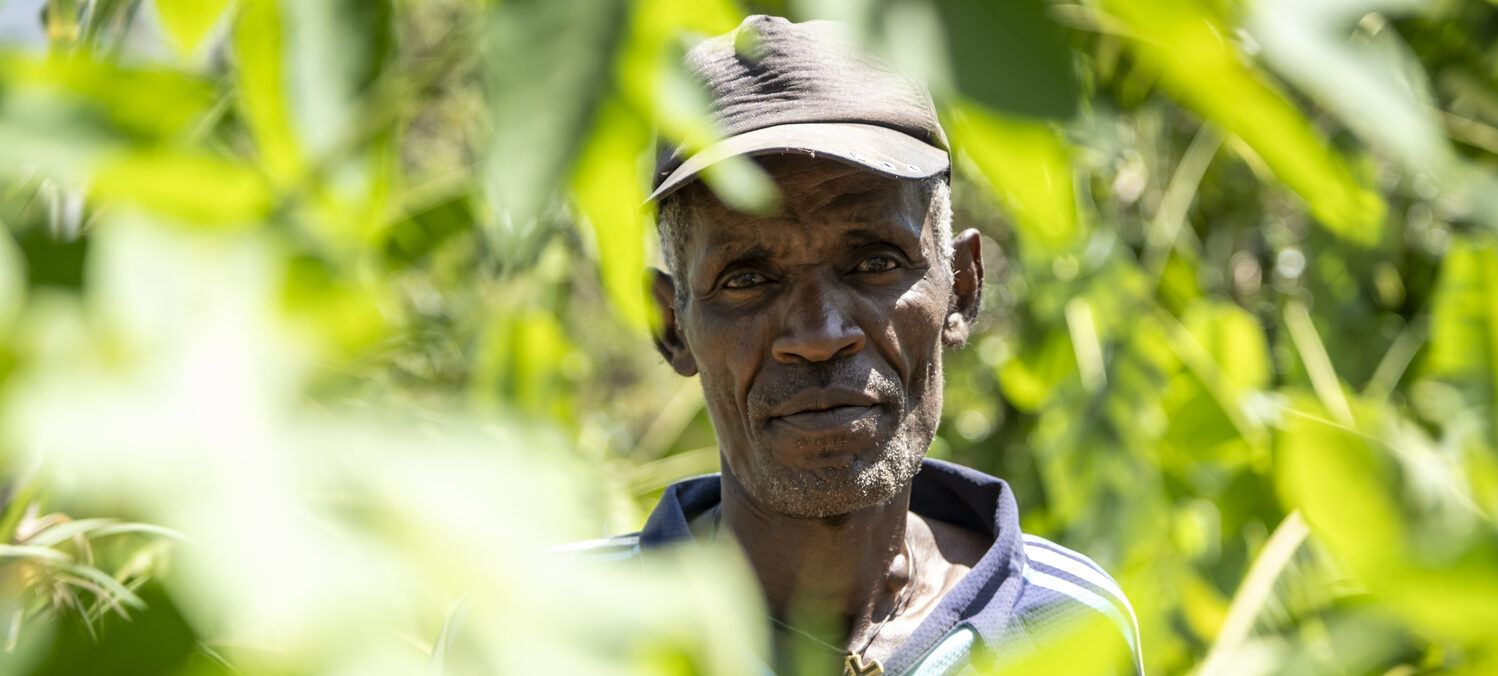
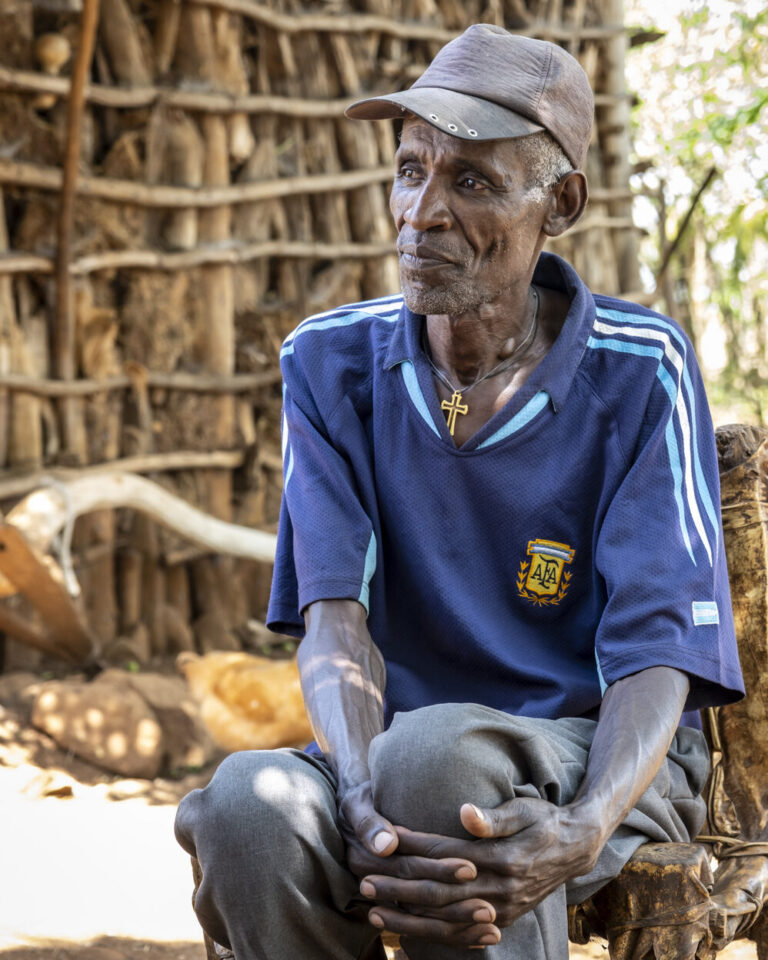
December is Chepo Madas’ favourite month. After many weeks of hard work in the field, the farmer can finally reap what he has sown and tended. Sweet potatoes, maize, white beans, cassava and ginger, which he has grown so far on his roughly one-hectare field in the village of Kawlo in the project area Boreda. December is also when the bananas in Chepo’s garden are ripe enough to sell at the market. The gaunt 69-year-old earns an equivalent of € 60 to € 70 per year.
But for too long, the harvests have not been enough for his family of 14 – wife, children and grandchildren. Months before the next harvest month of December, they need to buy their food at the local market. “This is the toughest time of the year,” Chepo explains. This is because the income from the sale of bananas runs out quite quickly. And the earnings of his two oldest sons, who produce small wooden furniture in the yard and work as cattle traders, are too little to feed everyone. “We then have to strictly ration the ingredients for the meals.”
Moreover, in recent years, the village of Kawlo has been far too dry. “It was the worst three years ago,” Chepo reports. A devastating drought hit the region of southern Ethiopia. Without rain, everything
in Chepo’s field died. “It was terrible,” recalls the farmer. He had no choice but to ask traders in the market to give him vegetables and cereals on credit, and then paid them with interest the following
year. “Thank God they agreed,” he says.
Agricultural training in agroforestry
In the summer of 2023, Chepo received over 20 avocado seedlings and some papaya seedlings, as well as 300 coffee bushes from the nearby nursery of the Foundation. Since then, the foundation’s development agent has visited him twice a week. He showed Chepo how to arrange the trees and shrubs according to the principle of agroforestry, so that they give each other shade and support each other in their growth. Chepo learned how to apply straw mulches and crop waste to better protect the soil from drought and evaporation and he started to plant vegetables between the seedlings. These seeds also came from Menschen für Menschen.
A diverse diet thanks to new fruit and vegetable varieties
“No one in the village knew about carrots,” says Chepo’s wife, Lenke. She was one of the first to taste the root vegetable. “I think they’re really delicious!” The 60-year-old stews the carrots, serves them with injera or uses them to make a sauce. Some of the beetroots were harvested and are now on the menu, while the couple sold the rest on the market, earning 750 birr, about € 12, right away.
Improved food security through higher income
In about three years, the family can expect further increases in earnings: the first avocado harvest will be due. “The coffee will also be fully developed,” says Tesfalidet Gebrekidan. He manages the Boreda project area, where Menschen für Menschen has operated since 2023. With the coffee cherries alone, Chepo can earn more than € 5,000 per year. He hopes that in the near future he will be able to buy two oxen to help him plough the field.
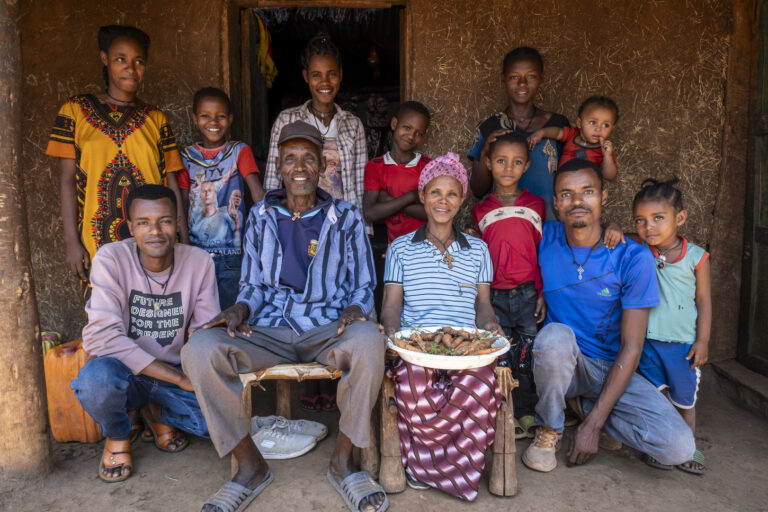
At some point, he would like to invest in a house in the nearest bigger city, where the children could live when they attend secondary school. But what is most satisfying for the farmer is that the family can buy food without any problems at the market: “We’ll have enough to eat all year round.”
Impact
Targeted agricultural measures lead to a sustainable improvement in living conditions. By distributing fruit tree seedlings and coffee shrubs, as well as providing agricultural training, farmers are not only supplied with essential resources but also with the knowledge they need to optimize their farming methods and increase productivity in the long term. Through higher productivity, they achieve greater yields, which enable them to generate significantly higher income. This additional income is crucial for strengthening food security.