
Water on tap!
In 2017, less than one-fifth of the population in Ijaji, the main town of the Illu Gelan district, had access to clean drinking water. Thanks to the construction of a deep well and six shallow wells, this figure had already risen to 41 %. Nevertheless, many people still had to travel long distances to fetch water or relied on contaminated rivers. Public facilities such as schools and medical centers also lacked a water supply.
Since the end of 2023, the residents of Ijaji can breathe easier: Menschen für Menschen has established a water supply system in the small town with financial support from the organization “Viva con Agua de Sankt Pauli e.V.”.
Finally, clean water
The big moment has come: Demere Ano turns with both hands a wheel made of iron. This opens the line. Immediately, water from the huge concrete reservoir shoots through a pipe, down the mountain towards the small town of Ijaji.
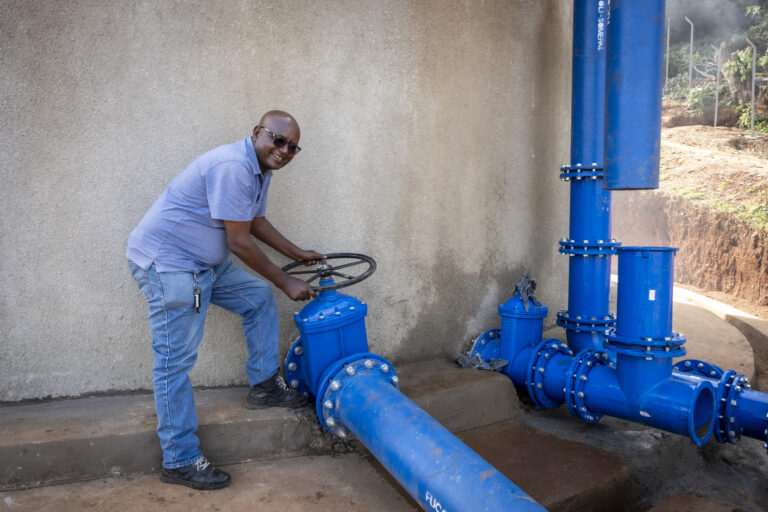
“Today we are testing whether everything is working,” explains Demere, head of the Illu Gelan project area. What he means by that is the water supply system for Ijaji that is finally ready. It was supposed to be opened long ago, but the contractor the foundation had commissioned miscalculated. Within months, the price of cement nearly tripled, and political unrest made matters more difficult. When the contractor fell ill and everything came to a standstill, Demere and his team finally took over the construction work in the summer of 2023. “We worked day and night and even on weekends,” the project manager reports four months later, not without pride. “I asked a lot of them, but ultimately the people need to get their water.”
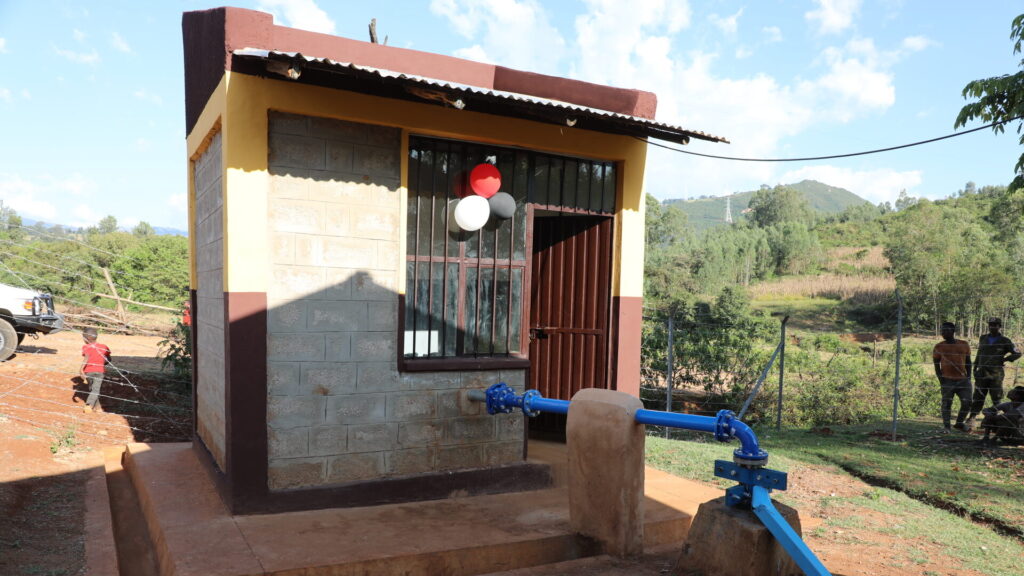
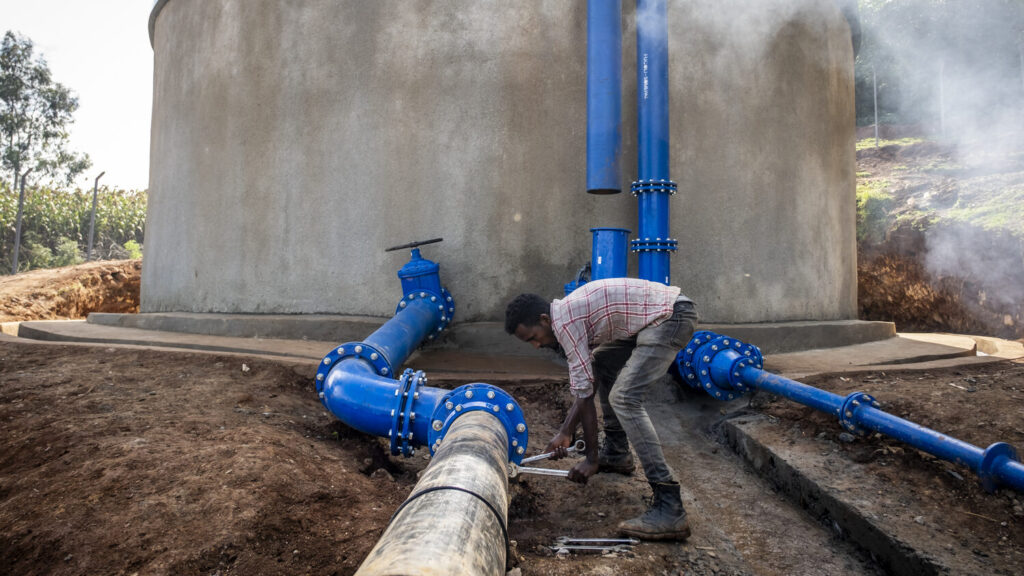
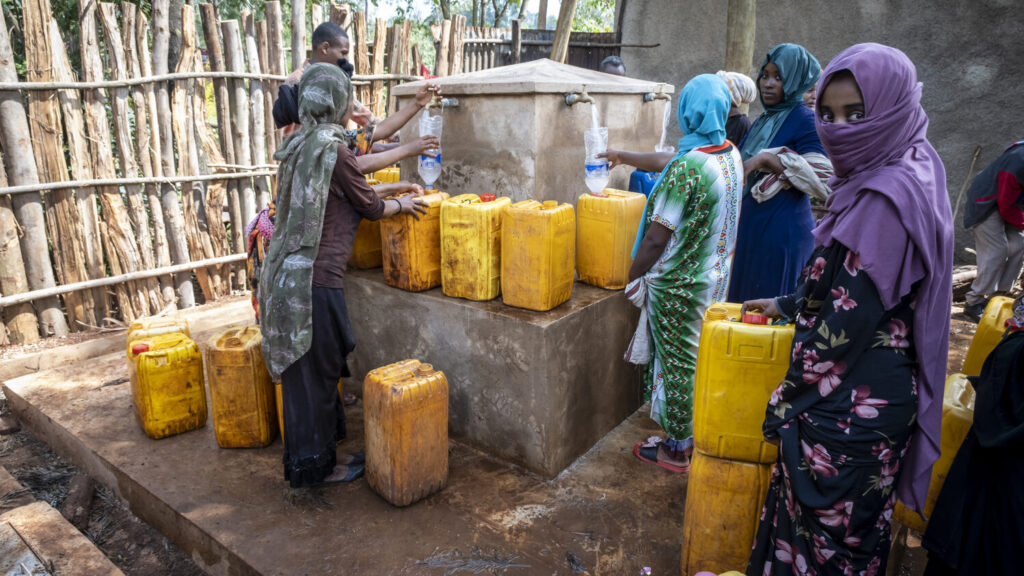
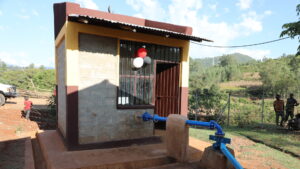
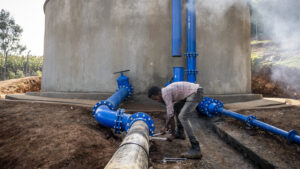
Today, the fresh water is pumped up from a depth of 152 metres and directed over two kilometres into a reservoir on a hill at the gates of the city. From there it flows to 15 dispensing points.
Water changes lives
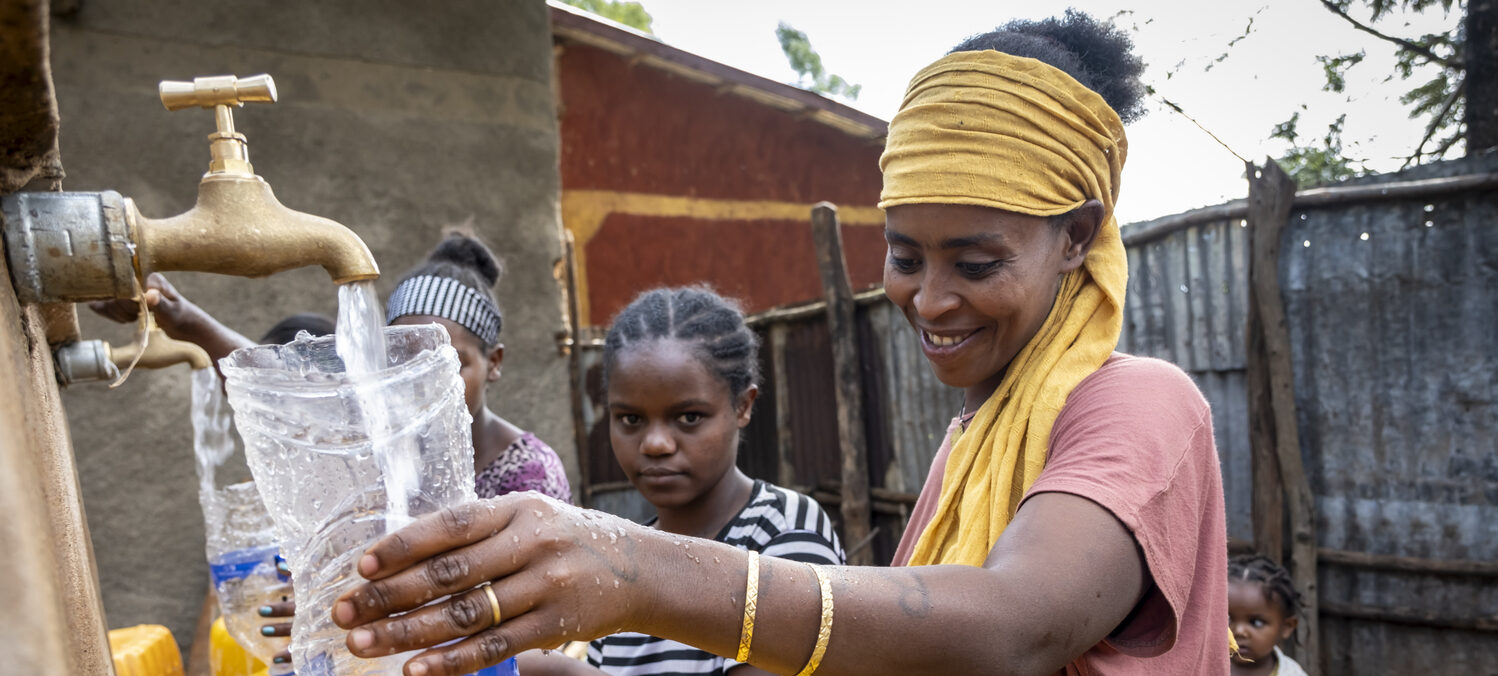
At one of them is 30-year-old Meskerem Birhanu. Water shoots out of the taps in front of her. “It is really flowing!” she exclaims with excitement to the people rushing from their homes across the dusty road.
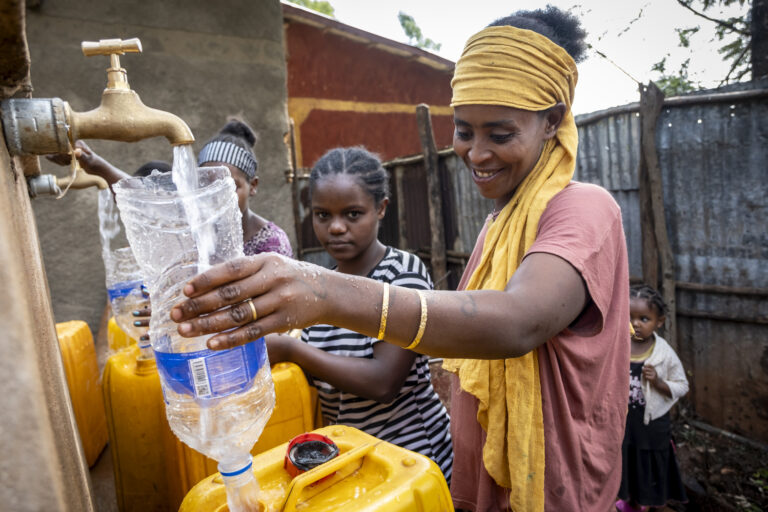
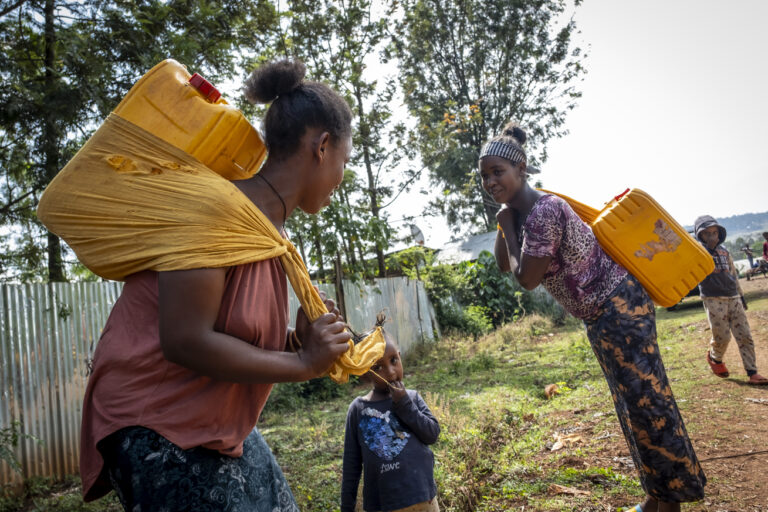
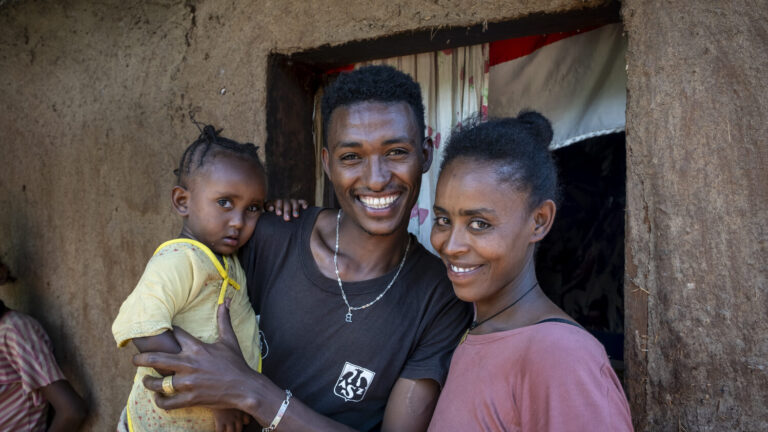
Meskerem is carrying her filled water canisters to the small rental flat she lives in with her husband, mother-in-law and three-year-old daughter. Before now, the family bought water from a neighbour whose house was connected to the city’s old utility system. Water only came through his tap every third day. “Sometimes even less often than that,” says Meskerem. She filled three 20-litre canisters from him. This had to last the small family until the next time there was water.
“We rationed it very carefully.” The family used it only for cooking, washing dishes and drinking. One of the nearby rivers had to be enough for house cleaning, laundry and bathing. Sometimes the neighbour’s water ran out too, then she had to buy water from merchants who had bottled it in plastic bottles from the city’s pipeline.
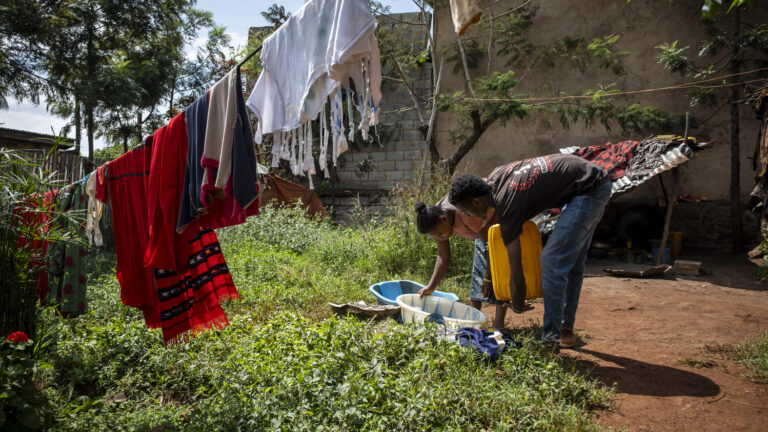
Meskerem is at her door. Some of the water she scooped in the morning spills into a plastic bowl in front of her. She adds some soap, grabs two shirts, puts it in the vat. “From now on, I don’t have to worry about not having clean water.” Meskerem would like to ask her landlord if she can grow some vegetables in the small garden. “I could water the garden with the water,” she says. Good for feeding the family – the new water in Ijaji can change the whole city.
Impact
The small-town water supply, built together with the local population, sustainably improves the living conditions of Ijaji’s residents. Access to clean, safe drinking water enhances hygiene and contributes to a reduction in preventable diseases. The water system also saves girls and women time that would otherwise be spent fetching water, allowing them to attend school or training courses. In addition, water committees have been elected in the town and are trained by Menschen für Menschen on how to maintain and care for wells and water points to ensure their long-term durability.