
Clean and smart
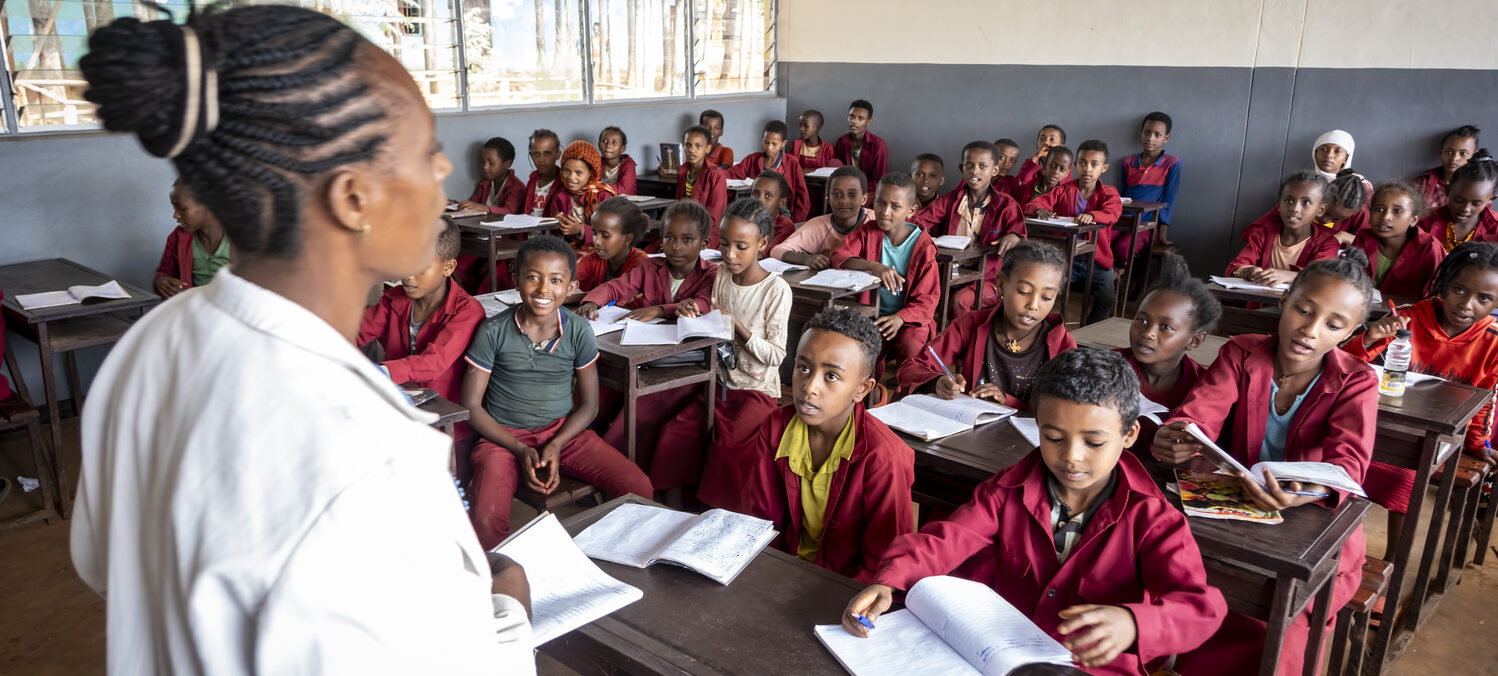
Little hands shoot up as Keneni Demoz asks her class to read the words on the blackboard. “Teacher, pick me!” someone shouts. This Friday morning, the curriculum of the fourth grade of the Gora primary school is Afaan Oromo, the language spoken here in the small town of Ijaji in the Illu Gelan project area. They’re learning about vowels today. “Madda,” shouts a skinny boy from the front row. “That means source,” he says. “That’s right, Noal! The word ‘Madaa’, on the other hand, means wound,” the teacher replies. Noal Gashaw grins proudly as his classmates clap after his contribution to the class discussion. Keneni also smiles. “Since we’ve been in the new spaces, the kids are really flourishing.”
It´ s more fun learning in well-equipped classrooms
Just two weeks ago, things were different. Directly opposite the classroom are the dark wooden, clay and straw huts, where classes were previously held. The small windows did not allow much natural light in. “We could hardly see the blackboard,” says Noal. He and the others had to squeeze in on the few still intact benches; there was a shortage of books. Both the children and teachers suffered due to the dust and clay from the crumbling walls: many had severe coughs or eye inflammation.
To ensure that the more than 1,100 primary school pupils and nearly 50 teachers finally have a suitable place to learn, Menschen für Menschen built new, bright classrooms, furnished them with chairs and desks, a large blackboard and chalk and issued textbooks. As is normal, the Foundation handed over the new building after completion to the local authorities, which are responsible for its operation and any necessary repairs down the line.
Connection to the water supply
In addition to the new classrooms, Menschen für Menschen has also built a small outbuilding for toilets including hand wash basins at the school. There were no toilets before. When kids had to go to
the toilet, they would just walk behind the school building.
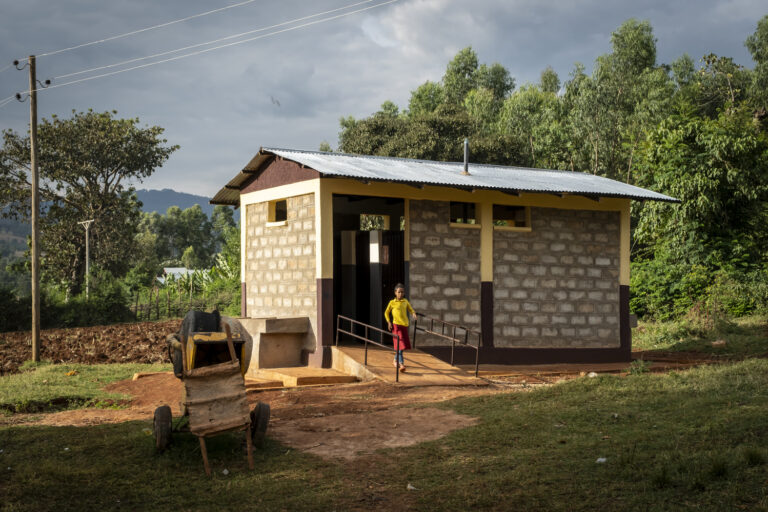
A hygiene club was set up at the school recently, and there are posters with practical information about washing hands with soap displayed all over the school premises.
Education as a tool
The Gora primary school is already the second school built by Menschen für Menschen here in the Illu Gelan project area. This also increases the chances that the future dreams of the young generation will come true.
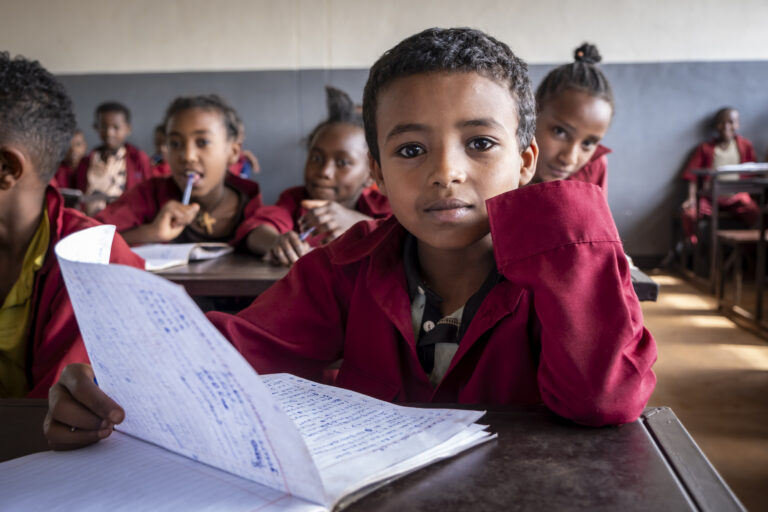
Ten-year-old Noal wants to become an electrical engineer. “So that we finally no longer have problems with the power supply in Ethiopia,” he explains. The eldest son of two teachers works hard every day to achieve this, prepares well for classes and doesn’t want to miss anything: “I sit at the front of the class so I concentrate better on what I’m learning,” he explains.
Children are the future
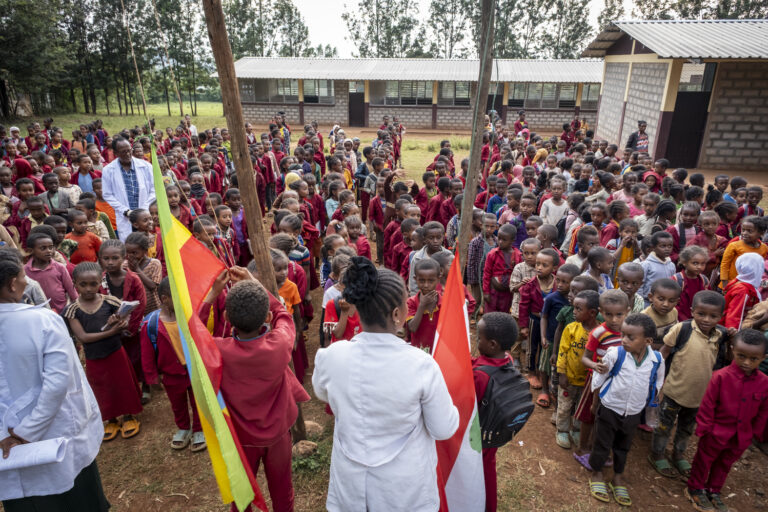
It’s now afternoon. The end of the school day. The pupils have lined up in front of the exit by age and class. The headmaster gives a short speech before the weekend. “Remember to clean your school uniforms and come here washed and combed on Monday,” he says.
Impact
The construction of a primary school with access to a water supply creates the foundation for a supportive learning environment. The improved learning conditions help children concentrate better in class and, as a result, enhance their academic performance. In the long term, this leads to a significant improvement in the educational level of younger generations, opening up better opportunities for a self-determined future.
How much does a good eduction cost?*
- With around 262 Euros, you can buy a school desk with a table.
- With around 5,000 Euros, you can give 100 children an 8-year school education.
- With around 2,620 Euros, you can finance a water tank.
*Examples only. Costs are subject to price and exchange rate fluctuations.