Knowledge creates prospects
A classroom full of promise
Development on an equal footing needs education. In rural Ethiopia, however, this is denied to many children. Girls and boys take on responsibility in their families at an early age: they help in the fields and herd cattle. In addition to this, schools are often difficult to reach, especially secondary schools. In order to visit them, students often have to travel long distances to learn in mostly old, dilapidated buildings. We are therefore building modern schools in remote villages and equipping them with furniture and teaching materials.
The dream of learning
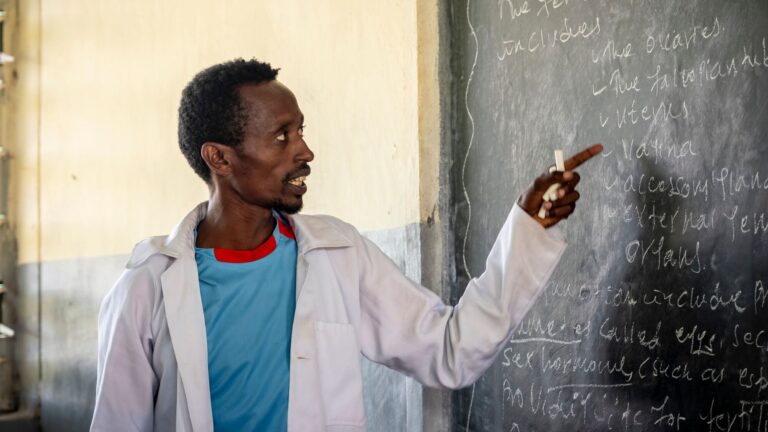
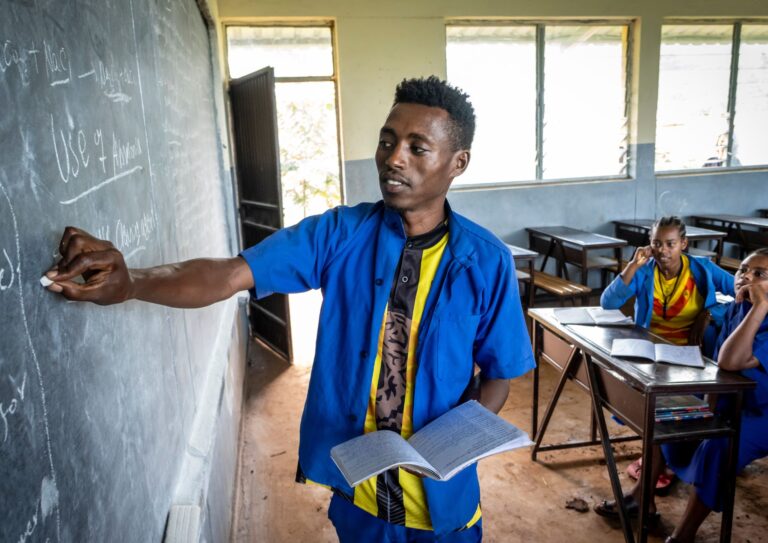
Zefano, 10.15 am: Human reproduction is on the timetable for year 11. “Last week we talked about male sex organs and hormones,” says Ayza Hota, a biology teacher. “Today it’s the women’s turn.” Although most of the students are in the middle of puberty, no one giggles. Everyone is listening carefully, taking notes. “The female sex hormone oestrogen causes the lining of the uterus to thicken and trigger ovulation,” explains Ayza.
The 38-year-old is himself from Zefano. During his childhood, there was only one primary school in the community. If you wanted to go to secondary school, you had to walk many kilometres to the next small town – or like Ayza, even move there completely. “Many families could not afford this,” he recalls. “Some of my friends dropped out of school.” In order to enable their children to attend school nearby, residents of Zefano and surrounding communities finally campaigned for a high school in the village. They talked to the authorities and raised money for the construction. Those who could not donate anything helped with materials and labour. This resulted in classrooms, a library and a staffroom.
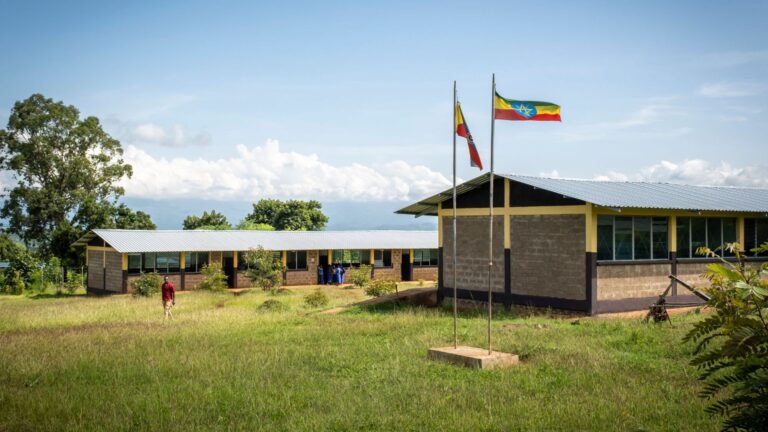
More than 650 children in years nine to twelve went to school there. Even some parents returned to finish their school-leaving certificate. “Of course, this was a great success,” Ayza recalls. But the dark huts of clay, straw and wood did not last long. Sand fleas lurked in crumbling floors and walls, and there was also a lack of furniture and teaching materials. Three years ago, Menschen für Menschen therefore began to build the school with funds from Sportler gegen Hunger e.V. The result is twelve classrooms, a library, a computer room and a staffroom. The Foundation also provided the school with books, chairs, tables and boards. Toilets and sinks were also built.
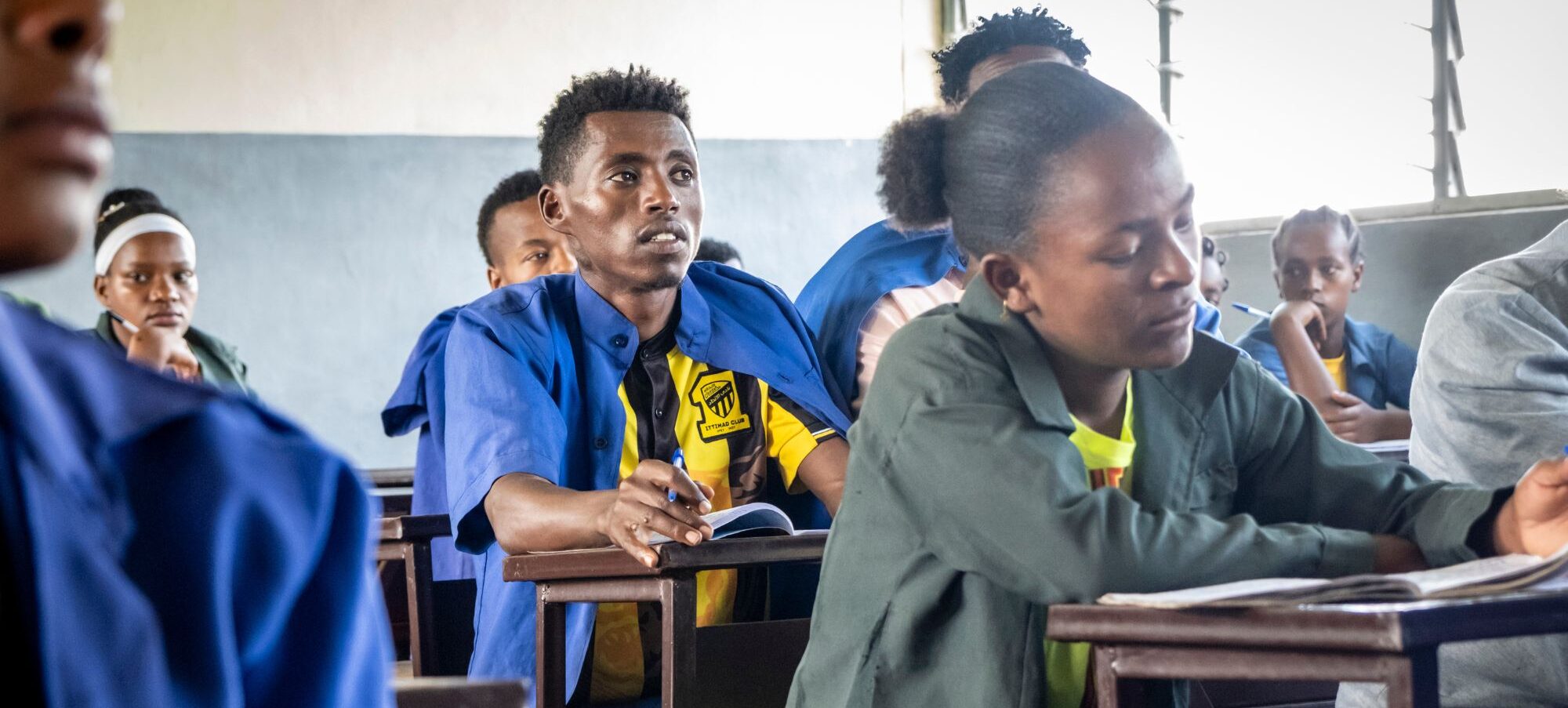
“We can concentrate much better today,” says Medamit Ayika, one of the pupils in Ayza’s biology course. This is also reflected in their grades. “The new school buildings motivate me to continue learning,” says the 19-year-old. She is the first daughter of her family to attend secondary school. Her two older sisters dropped out of school and married early. “I want to show my younger sister in particular that things are different.”
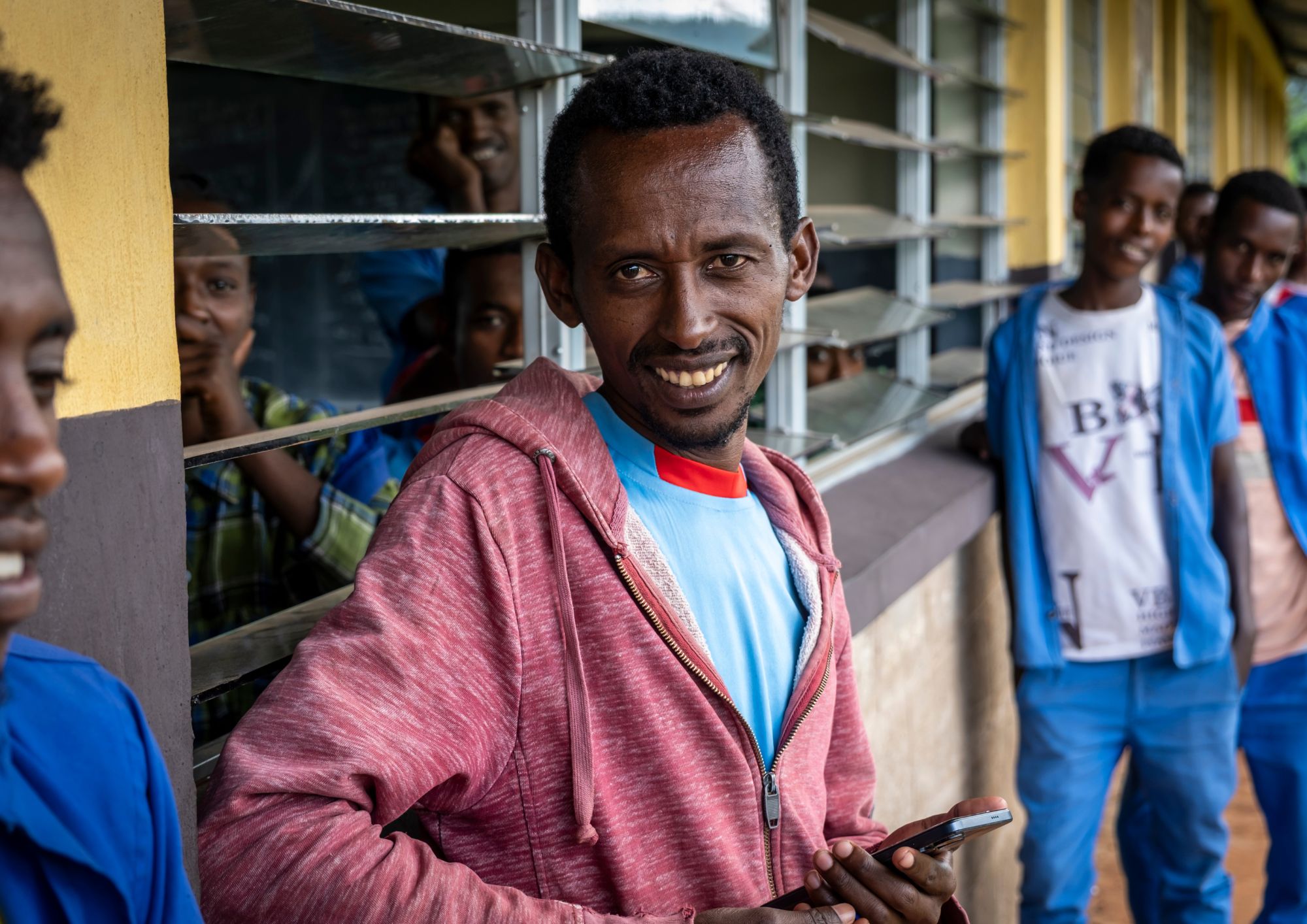
If Medamit still has a little more than a year to go at the school in Zefano, graduation for Cherinet Fankasho, one classroom further along, is imminent. “I study for several hours after school every day,” says the 24-year-old. He wants to be a doctor. This wish has to do with his own history: as a child and adolescent he fell ill with malaria several times.
He often missed lessons and had to catch up on the material he missed. When he later had to move away for high school, he gave up. Instead, he worked in his parents’ fields and as a day labourer in a factory in Addis Ababa. “I tried to save money to pay for the last years of school myself,” he says. “When I came back and saw the new school in the middle of Zefano, I could hardly believe my luck.” Fates like these, but above all the hope and will of his students, give teacher Ayza new hope every day. “I want to give young people the knowledge they need to take their future into their own hands,” he says. Today it is much easier in Zefano.
“I believe that this school will change the village. Motivated teachers teach children who later study and learn professions – and give something back to the region.”