
Back into the light
Project area: Borena
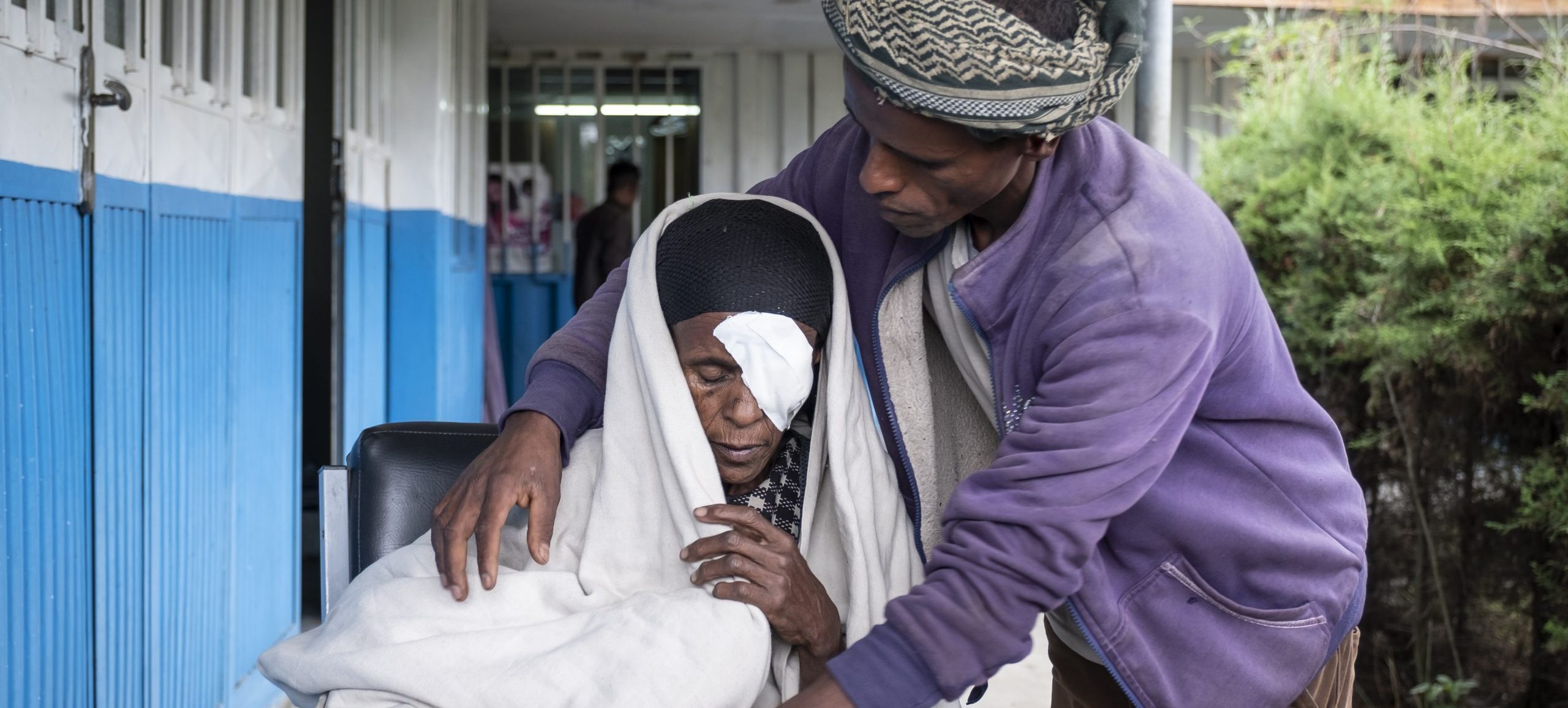
Several times a year Menschen für Menschen therefore organises free operations. They are carried out by trained eye doctors like 43-year-old Fekadu Kassahun. He actually works in a hospital in the capital and travels nearly 600 kilometres to the Borena project area to carry out his mission. He will stay for a week and operate on up to 25 patients a day. Menschen für Menschen pays him, and the two nurses who travel with him, a daily rate, as well as covering the cost of lenses and the necessary medical materials, such as needles, cotton wool and disinfectants. The government and the hospital pay for transport and accommodation.
In rural Ethiopia there is a lack of adequate primary health care and well-trained professional staff. If people become ill, they often have to walk for days to get to a doctor or a hospital. For many, medical help is not available at all. We equip rural health centres with materials, give people advice on questions around health care and family planning and explain about HIV. We also train medical staff, organise vaccination campaigns and provide operations – for example, for cataracts.
“We take care of everything,” reports Ali. While his wife gives her mother-in-law a hand with everyday things, washes and cooks for everyone, Ali tills his one-and-a-half-hectare field. The meagre harvest of wheat, Teff and beans has to do for his family of four and his parents. When he has to buy something, Ali works as a day labourer and earns between 1.5 and three euros a day. “The pressure weighs heavily on me,” admits the 38-year-old.
Through an invitation at the market he learned that the foundation was once again offering operations for cataracts. “I ran home at once and told my mother.” Together they took on the difficult journey to the project headquarters in Mekane Selam. “I’m frightened of the injections, but I want to see the treatment through,” says Zuwede. Like the other patients, she sits in front of the treatment room on a wooden bench, her hair tied out of her face with a plastic bag for the operation. “My husband and other people I know can see again. It must work for me as well,” she says confidently. A little later she is called.