
Finally a glimmer of hope
Looking ahaed
Rural Ethiopia lacks basic healthcare. The distance to the nearest doctor or hospital is often long. As a result, preventable diseases can be fatal. We are renovating poorly equipped rural health centres, supplying them with furniture and medical supplies. We also perform minor eye procedures to rid people of the bacterial eye infection trachoma. And we organise cataract surgery with local health authorities and trained medical teams.
Eyes full of hope
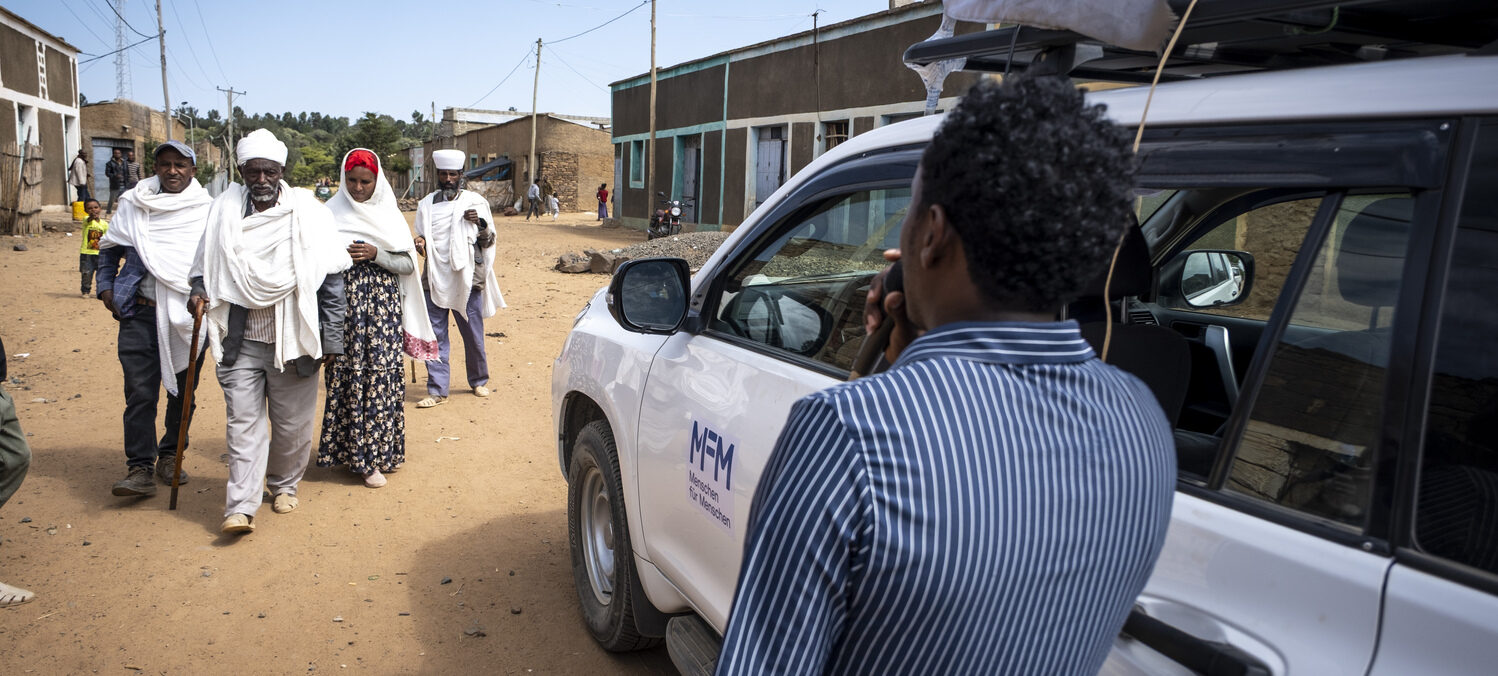
Slowly the SUV turns into the dusty village street of Adi Kelebes. A speaker box is mounted on the roof. Music buzzes, then the voice of a member of the health authority sounds. “Do you have problems with your eyes? Then get them examined next week!”
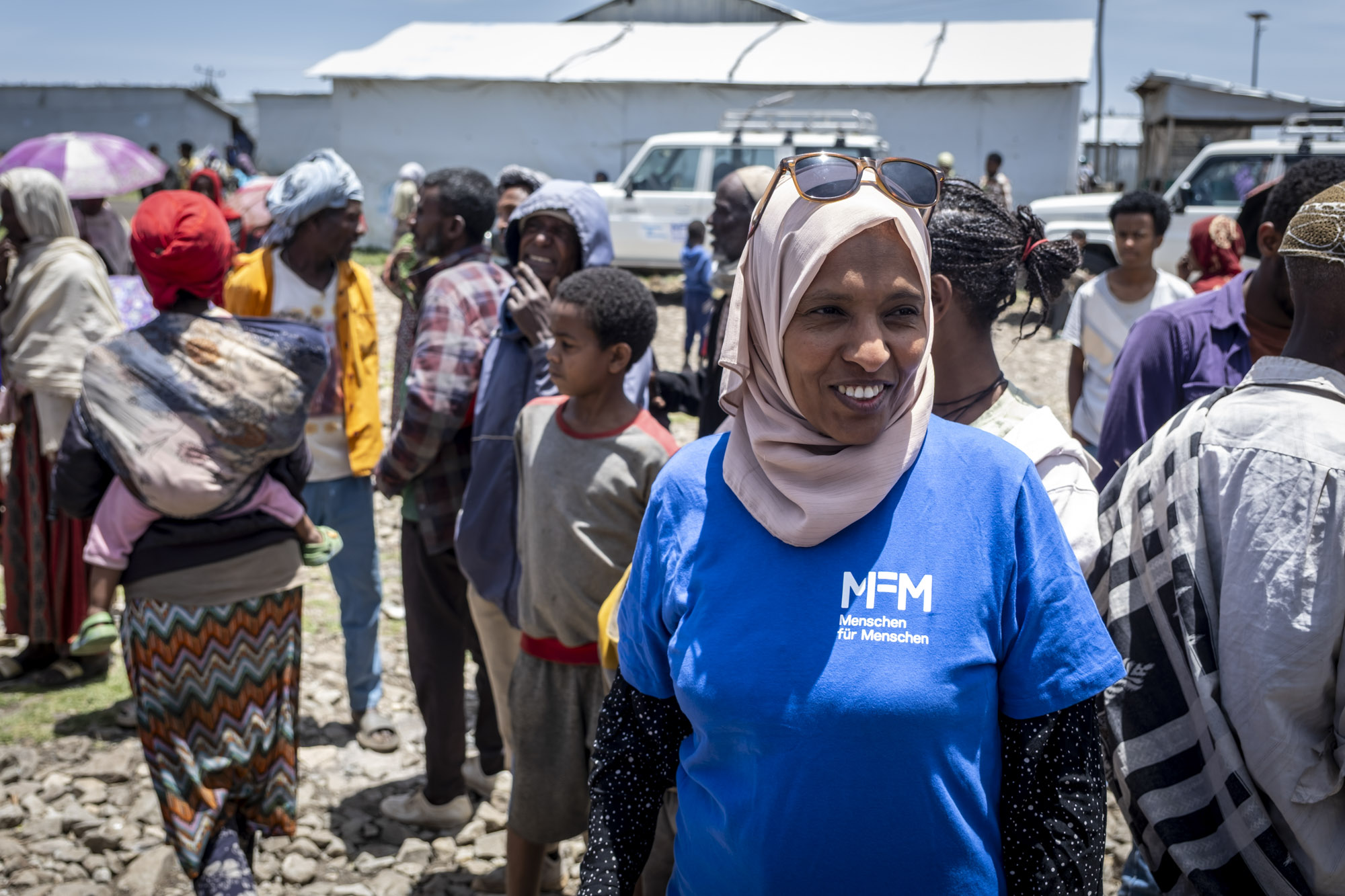
In the autumn of 2025, staff from Menschen für Menschen and local authorities spent seven days driving through three large districts in the Ethiopian state of Tigray. They stopped at markets, visited churches, mosques, schools and bus stations – including hard-to-reach areas near the border with Eritrea. They provided information about their eye health programme: the possibility to get examined free of charge and to be operated on in case of advanced cataracts. “It’s a mammoth organisational task,” says Hayat Mohammed, head of the Menschen für Menschen health department, about the campaign. “But we wanted as many people as possible to benefit.”
“Since we don’t have our own project area in Tigray, the organisation of the campaign was challenging. But thanks to the good cooperation of all those involved, we have been successful.”
Ophthalmological care is poor through out Ethiopia. There are only around 250 specialist doctors for the almost 130 million inhabitants. In Tigray, where the conflict between the Ethiopian army and rebel troops raged for two years, the situation is even more tense. Clinics were looted, drugs and fuel were scarce, journeys to examinations were often too dangerous. “This particularly affected the rural population,” says Meresa Gebreselaie Wagaya, director of the Quiha Hospital in Mekelle, Tigray’s capital, which specialises in ophthalmology. “After the conflict, it is understood that more than 30,000 people are suffering from cataracts in this region alone. The operation is a routine procedure for us.”
One affected person is Gebre Egziabiher Hagos. When he hears the announcements in Adi Kelebes that morning, he can hardly believe it. “Finally, a glimmer of hope,” he says. The 83-year-old priest, whose slim body is draped in a worn suit, holds a wooden cross in his hand. For almost 40 years he has been the head of the village’s parish. That is his calling, he says. But he did not know how much longer he could preach. “I hardly see anything out of my right eye anymore,” he says. “And with the left one, things are getting more and more blurry.” As a result, he can no longer read the Bible and quote from it during the service.
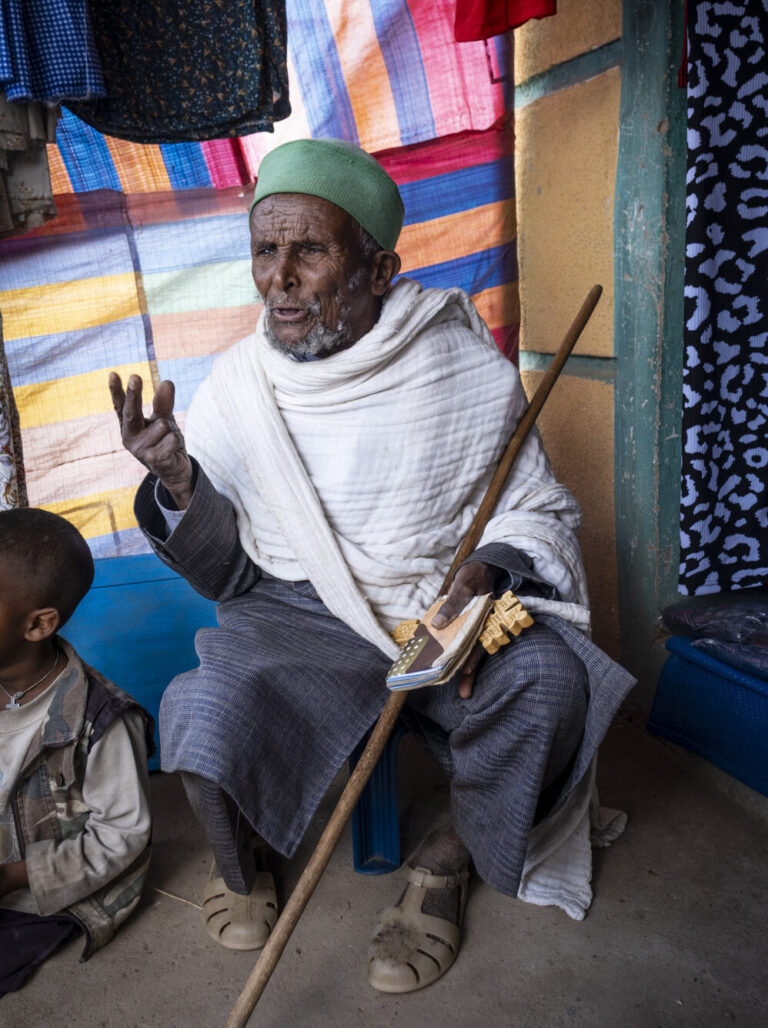
It began shortly after his wife died ten years ago. Gebre sometimes wondered if the many tears he cried for her had damaged his eyes. Or whether his complaints are a punishment of God. Such mistaken beliefs often stand in the way of a willingness to be treated, as Meresa Gebreselaie Wagaya knows. “People surrender to their fate,” he says. “We need more education here.”
The campaign is also contributing to this. At the end of this, less than a month, after passing through Adi Kelebes, more than 14,000 people had their eyes examined. In 1,511, treatable diseases such as cataracts or trichiasis eyelash malalignment, were diagnosed and operations planned. Menschen für Menschen took on the transport and catering of the inpatients and paid the medical teams that carried out the operations in three hospitals in the region. “It is moving to see people dancing, singing and praying again,” says Hayat Mohammed. “That makes the whole effort worthwhile.”