
Protecting mothers and children
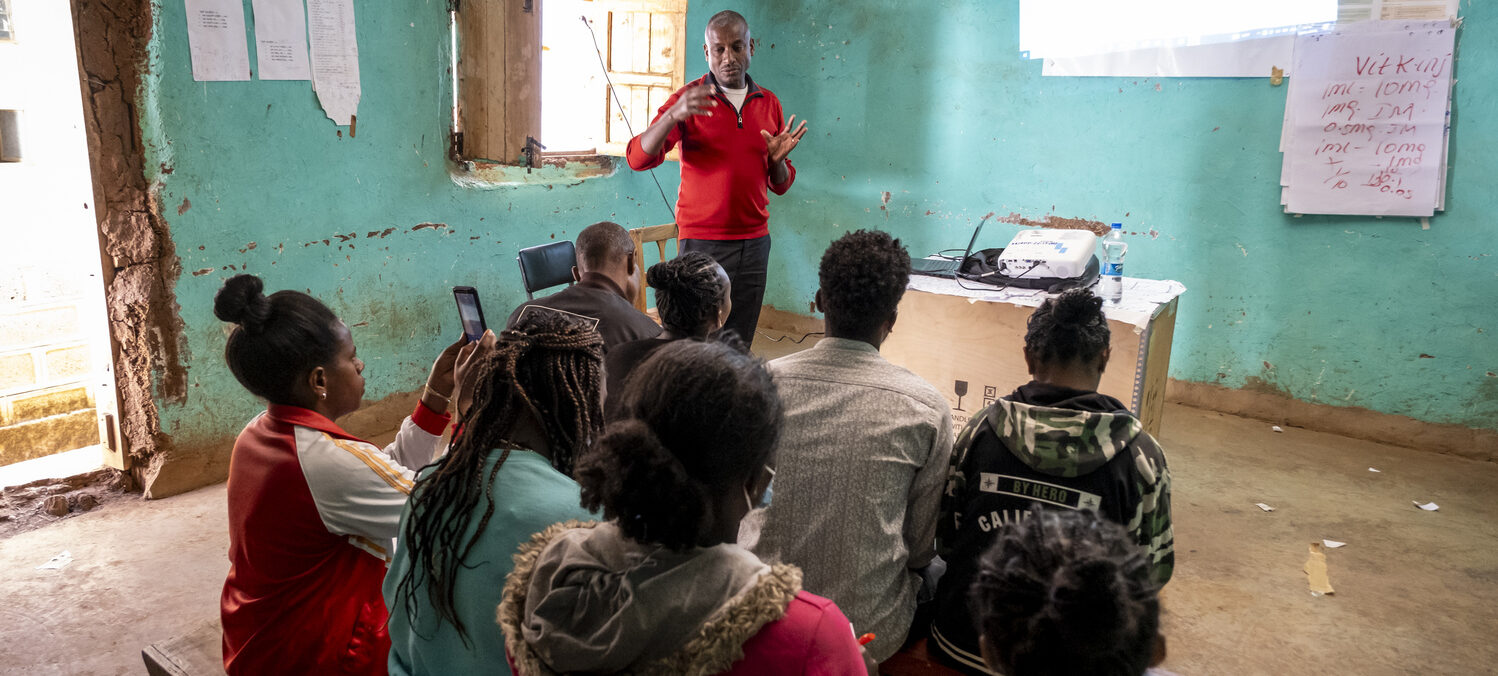
“Let’s pretend this is a baby,” says Gojole Goa, putting a plastic water bottle in the crook of his arm. The 50-year-old trainer is head of the Women’s and Children’s Health Department of the Wolaita Zone in the Kawo Koysha project area. “Here’s the head, that’s the body and these are the legs,” the trainer explains. Before him are eight young men and women. They are midwives and obstetricians, about half of them work at the health centre located in the small town of Lasho, where the training course is being held. The others are from a second health facility nearby. Their common subject over the next ten days is HIV infections and how to prevent their transmission from mother to child.
Training for healthcare facility staff
Menschen für Menschen organized the training in Lasho, arranged travel for participants and provides reimbursement to everyone for expenses made. Gojole was invited as the trainer. Many places in Ethiopia suffer from a lack of doctors. Therefore, healthcare professionals in rural clinics – and their advanced training – play a key role.
Awareness about infectious diseases
“If the mothers support their baby properly during breastfeeding, the risk of their nipples being injured decreases and thus the likelihood of any transmission,” explains the trainer, pressing the bottle against his breast. The most important thing is, however, to detect the infection early in pregnancy so that antiretroviral therapy can be started quickly. “Then, breastfeeding is not a problem, even if the mother is infected with HIV,” says Gojole.
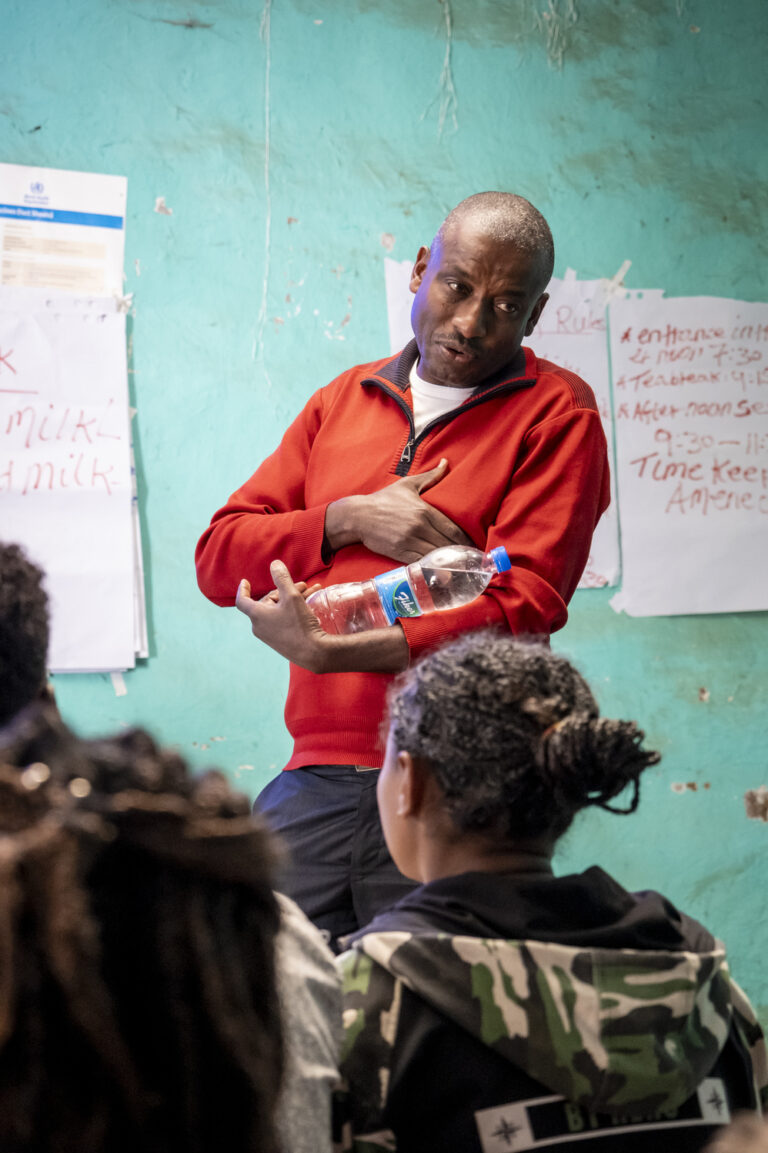
Betlehem Debebe listens very carefully to the trainer, taking notes as he speaks. “Naturally, I knew about HIV in general,” says the 28-year-old. “But far too little about how we can prevent the infant from being infected.” Betlehem has been working as a midwife in Lasho for about one year. Gojole’s training is already the second one she is attending.
A future with family planning
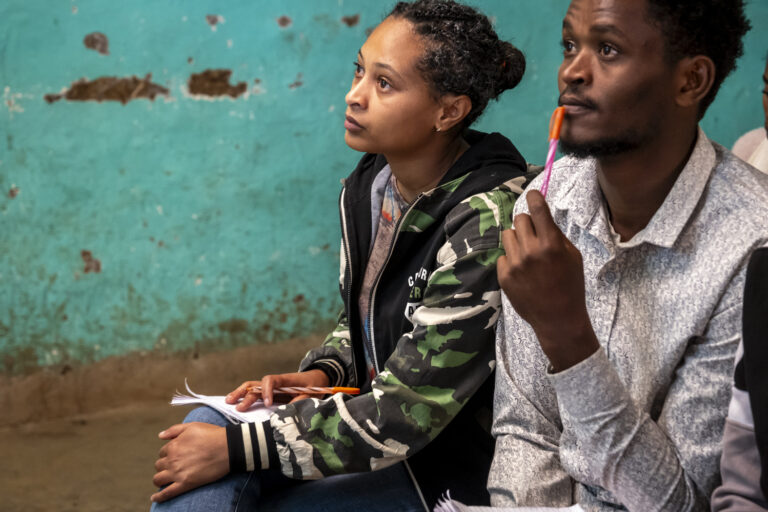
The first course was on the subject of family planning. “This is a sensitive issue in many marriages to this day,” says Betlehem, who regularly visits the surrounding communities together with other health centre staff. Traditionally, it is considered desirable to have many children. It was often the men who refused contraception. They found it hard to understand that fewer children is healthier for everyone. Betlehem tries to educate people at information events and during house visits in the villages. A training course organised by the Foundation taught her how to talk about this topic with married couples.
Bethlehem particularly seeks out pregnant women during her visits in these villages. “Too many of them still give birth to their babies at home,” she says. The midwife informs expectant mothers about the risks and strongly recommends that they come to the health centre for prenatal check-ups and the birth.
Provision of medical consumable supplies
She is now able to do so with a clear conscience, as the centre is much better equipped than it was a few months ago. “In the past, it sometimes happened that we were unable to treat people because we had no beds available or no bandages,” says hospital director Akljlu Bergene.
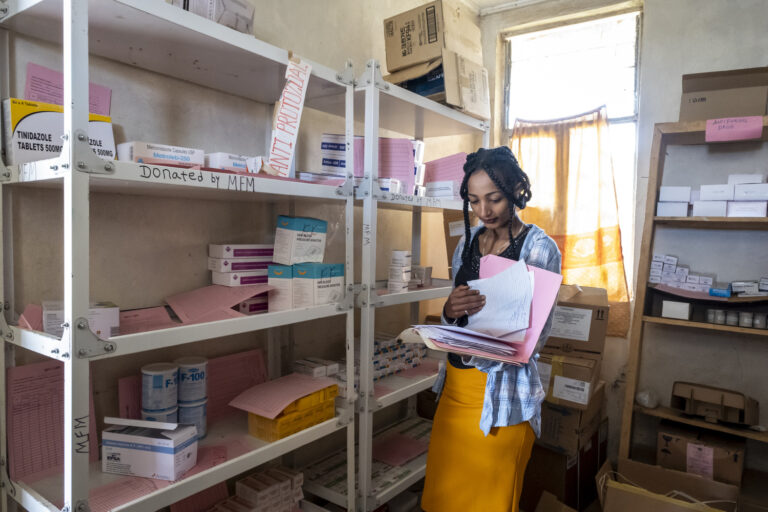
Menschen für Menschen has provided examination couches, delivery tables and hygiene items such as gloves. The Foundation also provided contraceptives, blood pressure monitors and a microscope. “The old one was broken,” explains Akljlu. “For months we have been unable to perform any tests in our laboratory.”
Impact
Training courses for medical personnel form the basis for sustainable improvement in healthcare provision in rural regions. Employees in healthcare facilities are taught comprehensive knowledge about infectious diseases and birth risks so that they can recognize these early on and respond accordingly. This leads to improved healthcare provision for the rural population and, in the long term, to better health, particularly for mothers and children.