Uterovaginal prolapse (UVP)
How we are helping
Rural areas in Ethiopia lack basic health services and health professionals. If people fall ill, they often have to walk for a whole day to get to the nearest doctor or hospital. Preventable diseases sometimes end up being fatal. This is why we are renovating the often poorly equipped rural health centres, equipping them with furniture and materials. We also train local medical staff, transport vaccines, organise awareness campaigns and facilitate operations – for example, gynaecological procedures.
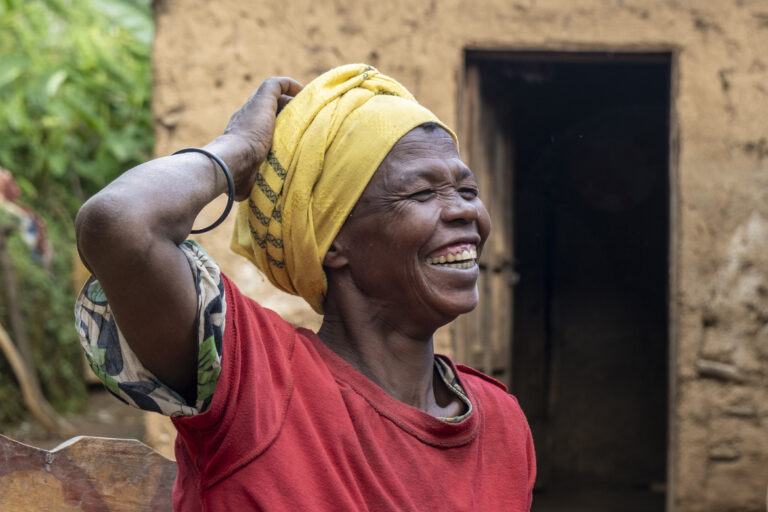
Workinesh Meskale holds a small yellow canister under the tap. The other women at the water point have much larger ones, 15, 20 litres fit in there. Just three in Workinesh’s canister. “I’m just happy that I can fetch water again without any problems,” she says, smiling shyly. There are two reasons for this: since the Foundation built a water point right in her neighbourhood, she and the other people in Marea in the Kawo Koysha project area no longer have to walk for hours to get clean drinking water. The Foundation also enabled Workinesh to have an operation that changed her life. The 54-year-old woman suffered from a uterovaginal prolapse, or UVP. In affected women, the uterus protrudes from the vulva. At the beginning, pelvic floor exercises can help and are effective as a preventative measure, but in its advanced stages, the condition causes severe pain. It can lead to bladder weakness and can then only be treated surgically.
“The main causes are prolonged hard physical labour and home births without medical supervision,” explains Mulugeta Tadesse Lema. He is a gynaecologist and one of the doctors who carried out many of the interventions in the Kawo Koysha project area. “The fact that the condition is such a taboo that nobody talks about is a problem. So many women suffer for a long time before we can help them.”
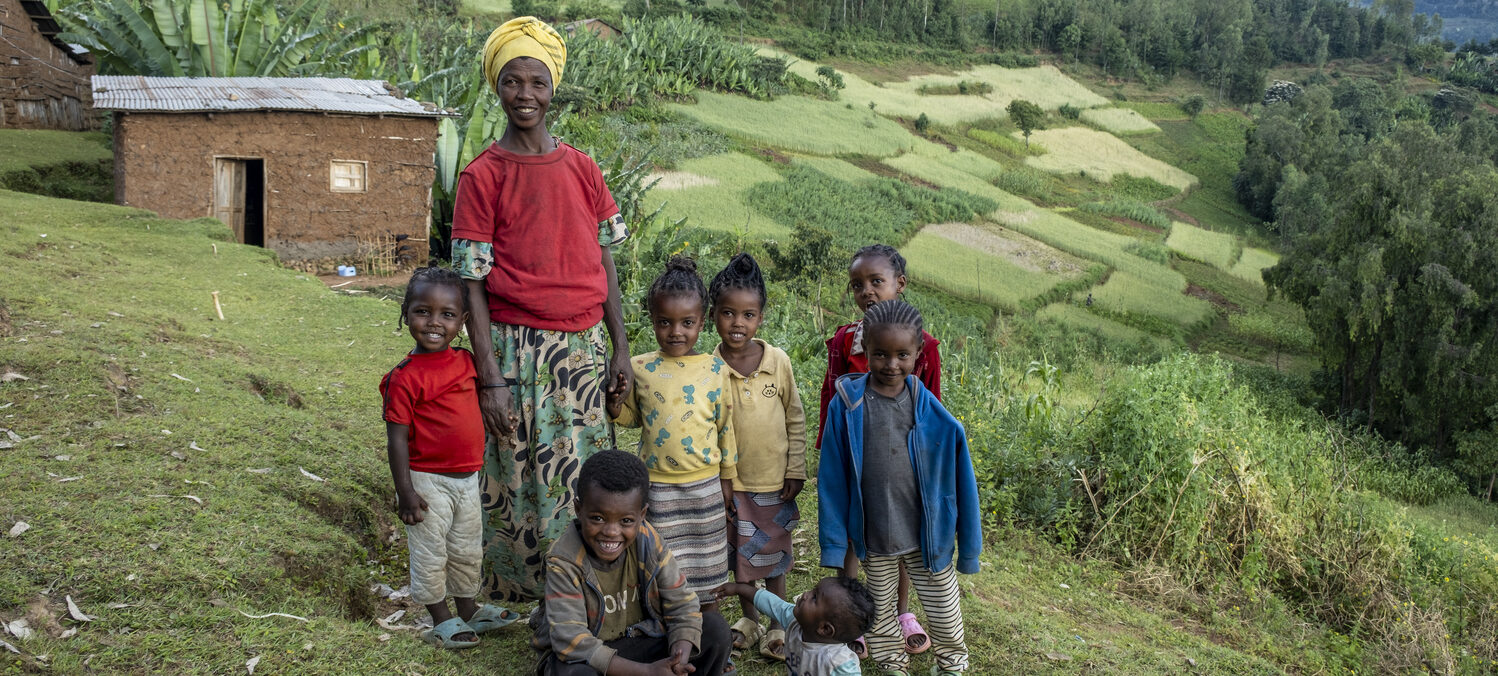
Workinesh grew up in Marea. “Back then, there was no water, no electricity, not even a road,” she remembers. There were recurrent landslides in the area, making it difficult to cultivate the fields. Even as a little girl, Workinesh helped her parents. She hauled firewood, looked after the animals, even ploughed the field. She never attended school. Workinesh had her first child atthe age of 19, and six more followed over the next twenty years. She gave birth to all of them at home. “Only the traditional midwives in the village helped,” says Workinesh. If her life had not been easy up until then, it became even more difficult four years ago. “I was harvesting sweet potatoes when I suddenly had severe pain and a strange feeling in my abdomen,” says Workinesh. Later, when she was changing, she saw what had happened. And remained silent.
Invisible suffering: a taboo in the village
None of her neighbours had ever spoken about such an illness. Workinesh also hid it as best she could. She tied a piece of cloth tightly around her abdomen and took part in weddings, funerals and normal village life, even though she could often hardly sit because of the pain. She didn’t reveal anything to her family either. “You couldn’t tell,” says her eldest son, 35-year-old Abebe Feyisa.
It was only when a social worker from Menschen für Menschen in Marea informed her about the condition and told her about the operation that would fix it, that she confided in her. The Foundation organised the operation and paid for the transport to the hospital. Back at home, Workinesh had to take it easy for the first four weeks. She should also continue to take care not to lift anything too heavy. But today she can go to church again with joy, do light work in the fields, fetch water and play with her grandchildren without pain. “That’s what I’m most happy about.”
She spends a lot of time with her son Abebe’s five-year-old twin daughters in particular. When they sit next to her while she prepares coffee or food, she sometimes tells them made-up stories about wild lions and monkeys. “When they are old enough, they are to go to school. Then later go to university and learn a profession,” says Workinesh. “And never have to suffer like me.”