Wash day in Madea
Short distances, big impact
Clean water is a requirement for many things: health, regular school attendance and a productive everyday life. In rural Ethiopia, this is certainly not a given: four out of ten people lack drinking water. Women in particular walk long distances to reach water. If it comes from ponds and rivers, it is often contaminated with bacteria and parasites. This results in diseases that can even become life-threatening. Together with the people, we are therefore building spring developments and entire supply systems for villages and small towns.
When water changes everyday life
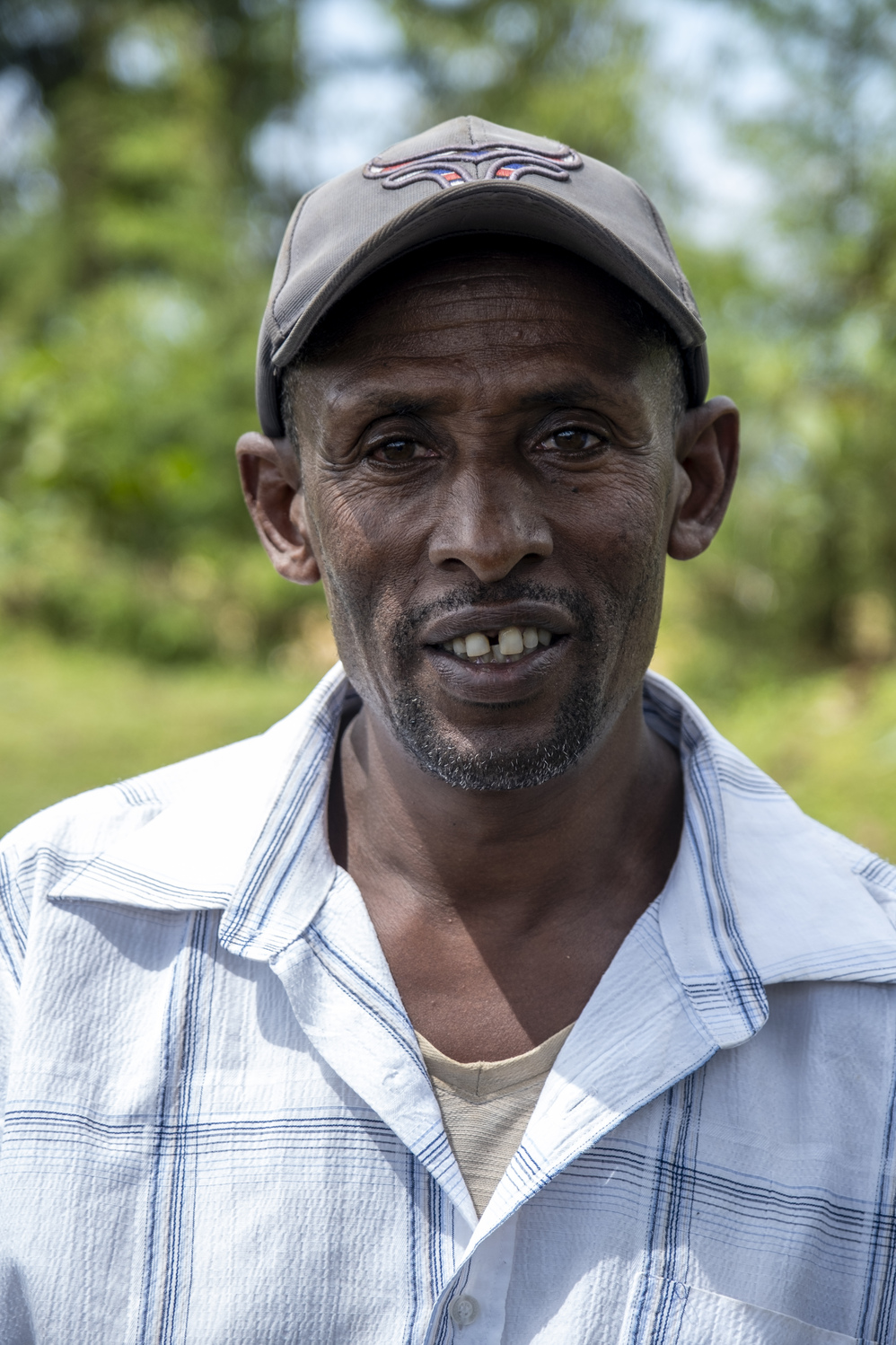
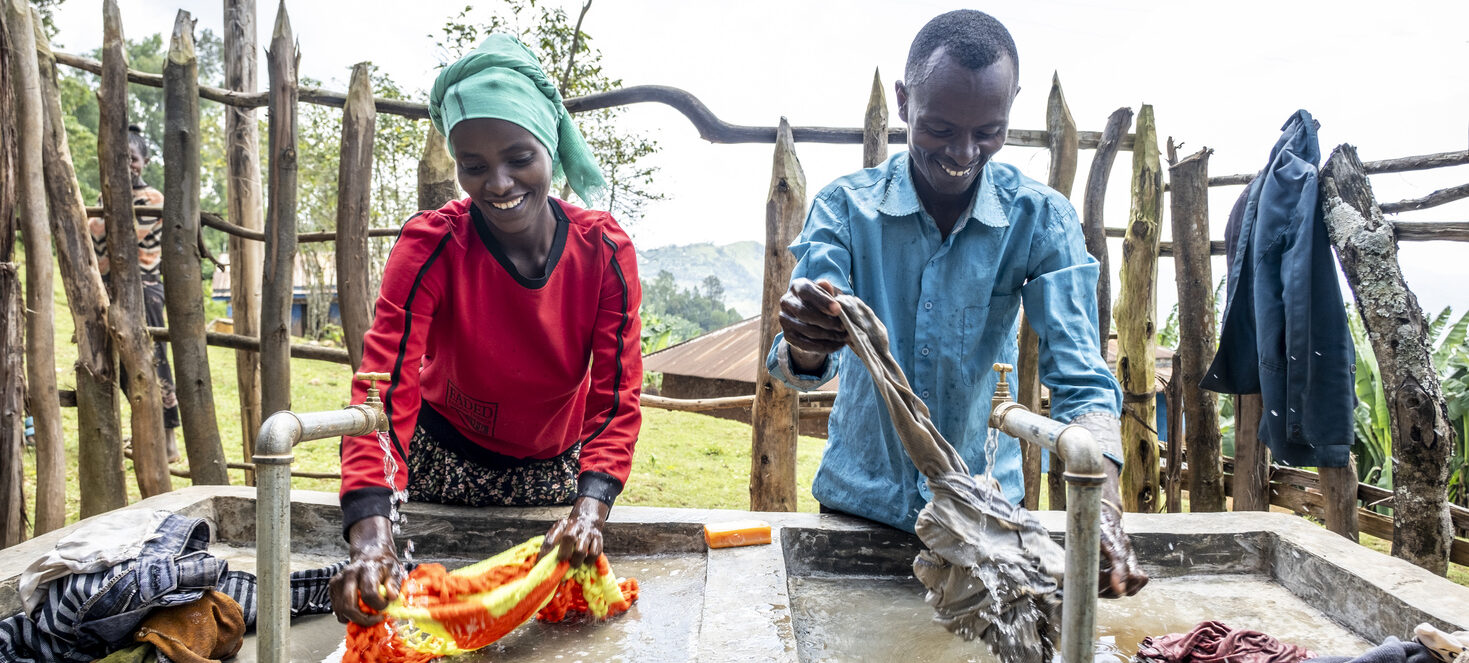
Teferi Cheka holds his shirt in the sunlight to see if all the marks are gone. “There’s another one,” he murmurs, grabbing the soap again, scrubbing the fabric and finally holding it under the tap in front of him. Next to him, at the edge of the large sink, are other garments of his wife and children.
The fact that a man does the laundry for the whole family is rather rare in rural Ethiopia. But the 37-year-old is no longer the only one in his village. “Since I’ve been able to do it right here in the neighbourhood, it’s not a problem,” says Teferi. “It’s even fun!”
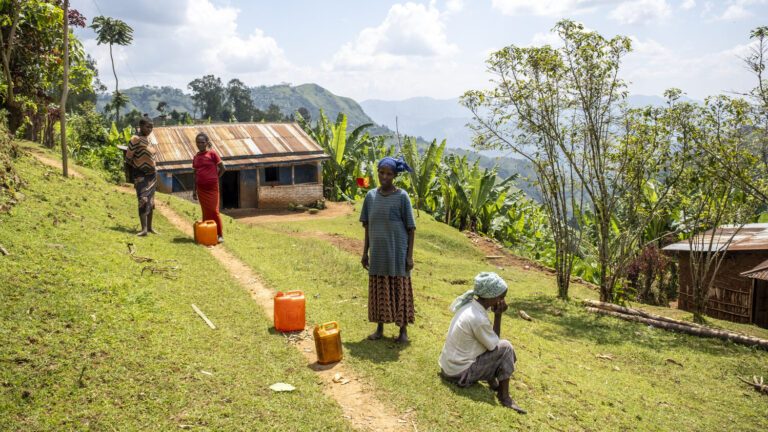
Just a few months ago, water for drinking, cooking, cleaning and washing was scarce in Madea in the South Ethiopian Highlands. Every day, people had to walk long distances to a water point built by the government years ago. So did Teferi’s spouse, who as a woman is traditionally responsible for fetching water. Sometimes her eldest son, now 17, helped her. It took them more than two hours to get there and back, plus the wait for their turn. Some families would prefer to draw water from a river a little closer. “The doctors and nurses warned against this,” says Teferi. Parasites are abundant in the unprotected and polluted waters. In Madea, children in particular repeatedly fell ill with severe gastrointestinal infections.
The entire family had to make do with the 20 to 30 litres that Teferi’s wife dragged home every day: six children, the grandmother, the cattle. “When things got scarce, we cleaned our house less thoroughly or washed ourselves less frequently,” says Teferi. “Drinking always came first.” His wife usually took the clothes with her to the water station to wash them. An extra weight on the long road.
In order to provide people with worry-free access to clean drinking water, Menschen für Menschen built a small water supply system for the village of Madea. A natural spring 2.4 kilometres away was enclosed. From there, the water flows through pipes into a tank in the village and from there to a dispensing point. In addition, the Foundation built a livestock water trough and sink. A neighbouring village was also integrated into the water supply, as well as a church. Around 80 households are benefiting. “Everyone really got involved in the construction work,” recalls Zerihun Gezahegn, head of the Kawo Koysha project area, which includes Madea. Women and men, young and old, dragged stones, sand and cement, dug deep holes, donated wood for the fences.
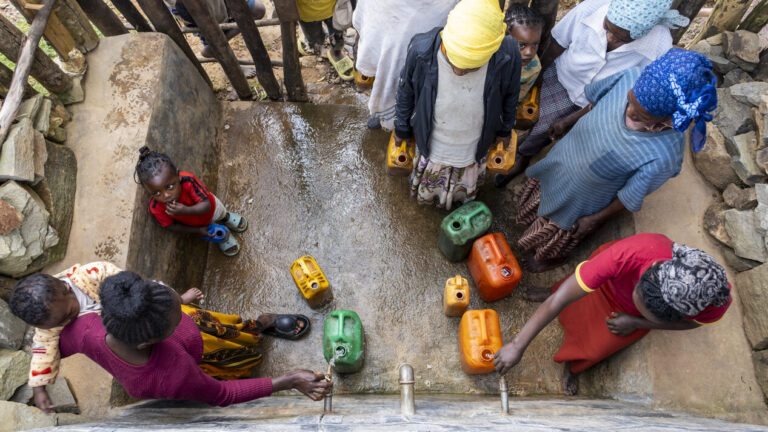
To enable the villagers themselves to maintain the facility, Menschen für Menschen has trained a water committee. During a multi-day training course, its members learned how to carry out minor repairs, replace individual parts, clean the water tank and dispensing points. “Most often, the handles on the taps break due to intensive use,” explains Tesfaye Janga. The 40-year-old is responsible on behalf of the government for all 15 water points in the region, including three from Menschen für Menschen. “They have an exceptionally high standard,” the expert praises. “I think they will be preserved for people for a very long time.”
That’s what Teferi Cheka hopes. People are healthier, stronger, and women in particular can now devote their time to other things and contribute to the family’s income. “The water has changed our whole lives.”
“The Foundation’s facilities are exemplary: made of good material, the water tank is easy to clean and the troughs for livestock are at a good height.”