Sustainable agriculture and nutrition
Sustainable agriculture and nutrition
The key to a profitable future
Over 70% of the people of Ethiopia live from farming. However, due to the one-sided cultivation of farmland, many soils are depleted, and harvests are often meager. Soil erosion further destroys important farmland.
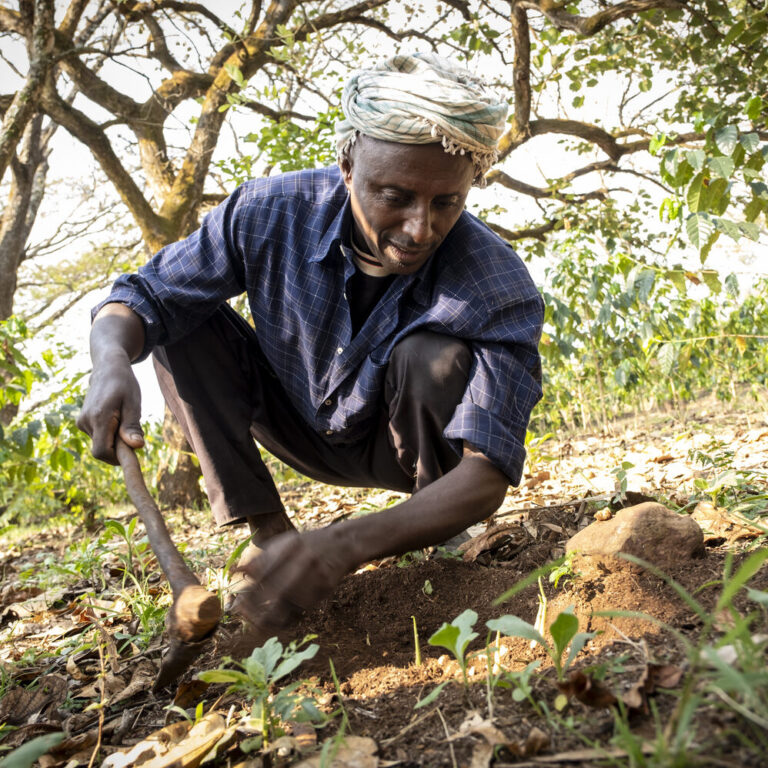
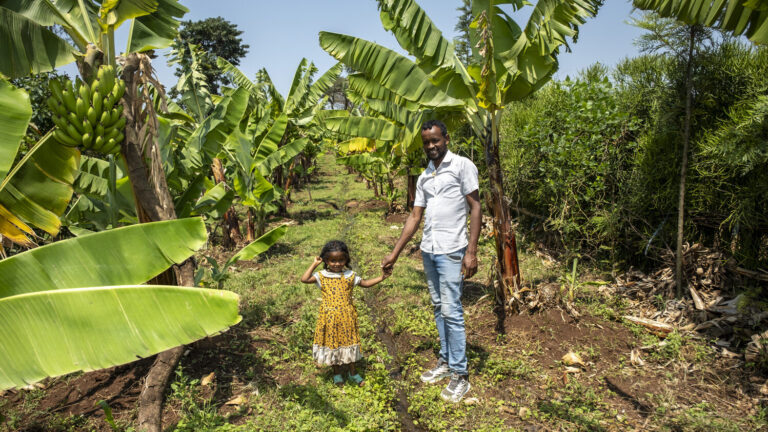
To change this situation quickly and sustainably, we rely on ambitious model farmers in our project areas. We train them to make their farming more productive, introduce them to new varieties of vegetables and fruits, and teach them more effective farming methods. Their rapid success inspires and motivates many others to follow their example.
Poor yields
For many smallholders the produce of the land does not even suffice until the next harvest. Some of the reasons are:
- Too small, parcelled cultivated areas
- Antiquated farming and irrigation methods
- Continuing erosion
- Lack of or irregular rainfall
- No access to seed
- Crop losses due to incorrect storage
Our activities
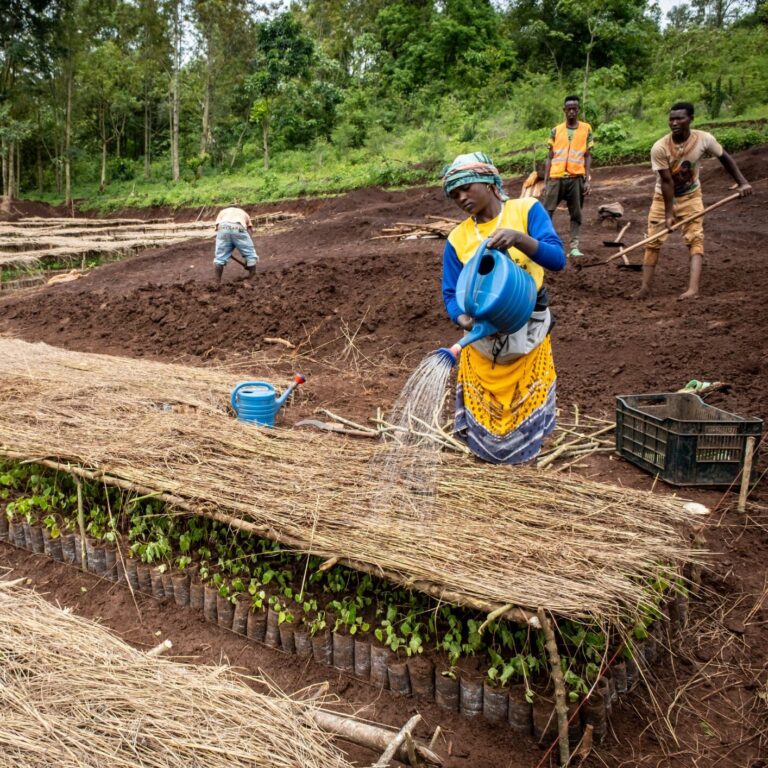
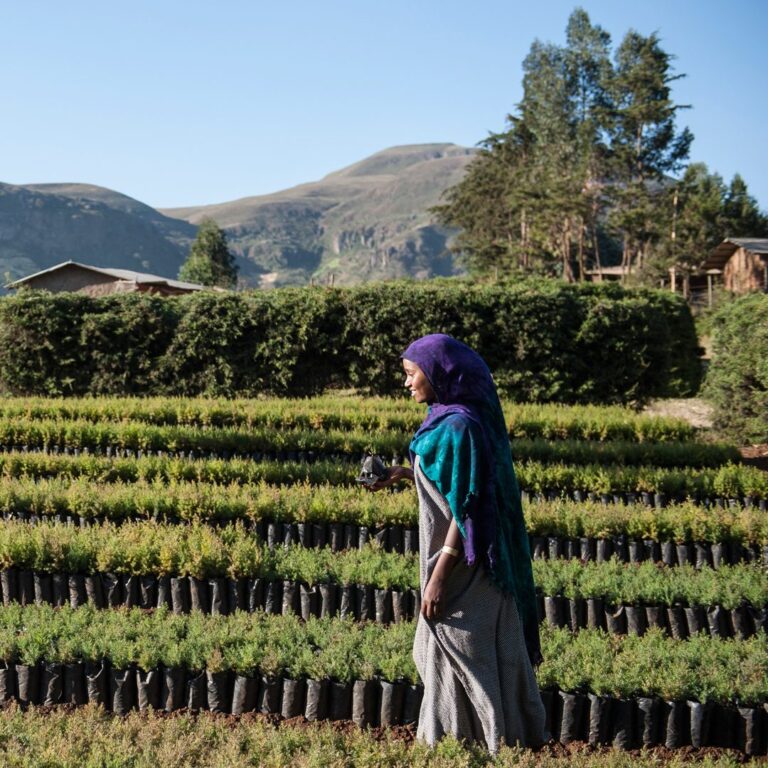
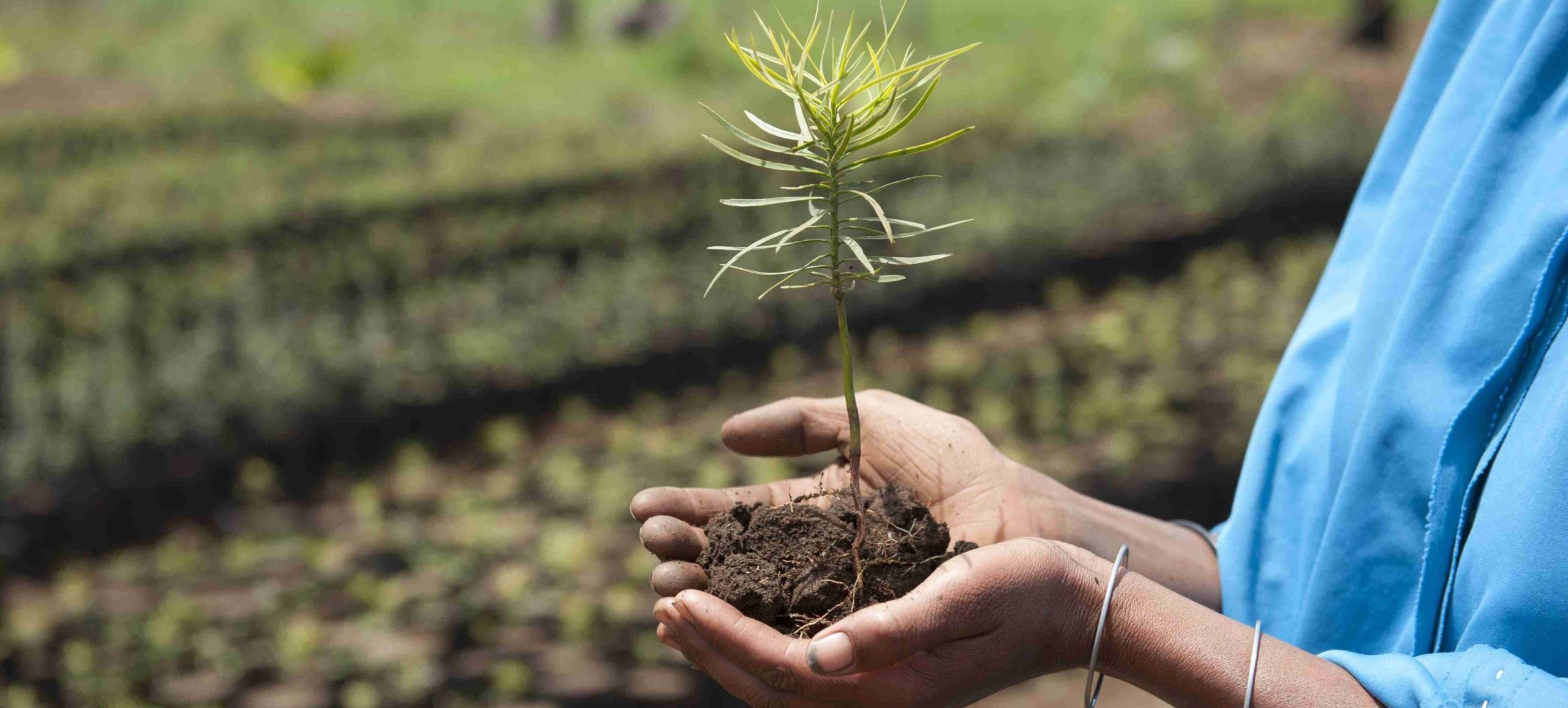
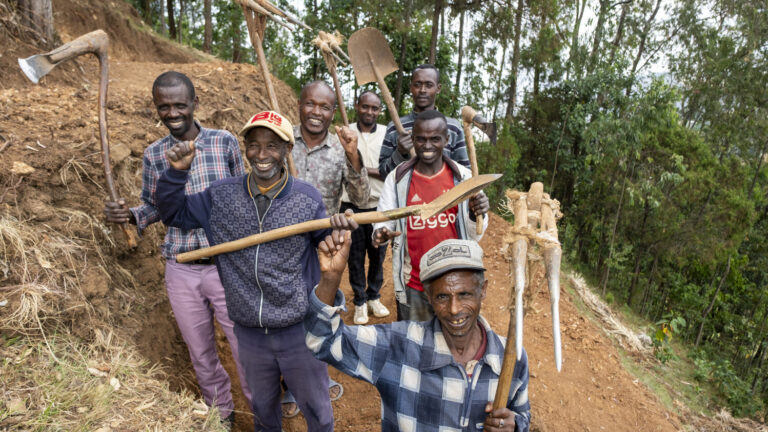
Creating terraced fields and stabilizing them with deep-rooted vetiver grass is an initial but long-term effective measure against erosion. Gully and erosion ditches are stabilized. For replanting, we grow over 20 million new seedlings in our nurseries every year. In order not only to preserve but also to expand the country’s remaining tree population, Menschen für Menschen – in addition to its reforestation programs – is also distributing wood-saving stoves (“Green Stoves”) and organizing training sessions on organic farming. The foundation relies on farmers to pass on their knowledge and inspire others across the country to follow their example.
With a combination of measures, food security in an entire region can be improved. The farming families are able to build up stocks and secure themselves again harvesting shortfalls.
- Agricultural courses for farming and irrigation methods
- Erosion control and afforestation
- Establishment of tree nurseries to produce tree, fruit and vegetable seedlings
- Introduction of more productive hens and improved beehives
- Introduction of garden plots and distribution of grain, vegetable seeds and fruit tree seedlings
Knowledge and new techniques
Menschen für Menschen is relying on the transfer of knowledge and new techniques. In courses, farmers learn how to terrace their fields and plant them correctly to maximize their harvests. In addition, they have access to improved seed and new fruit and vegetable varieties such as carrots, Swiss chard, cabbage, beetroot and tomatoes. Parents are then able to feed their children balanced and healthier diet in the long term.
Afforestation of eroded land
For the rural population of Ethiopia wood is a precious commodity, particularly for building houses and huts, and for burning in stoves. Women and girls are often busy for hours collecting firewood. A further reason for deforestation is the need for new farmland when, for instance, the old fields have become unusable due to erosion or poor soil quality. According to “The World Factbook”, today only 12,2% of the surface area is forest.
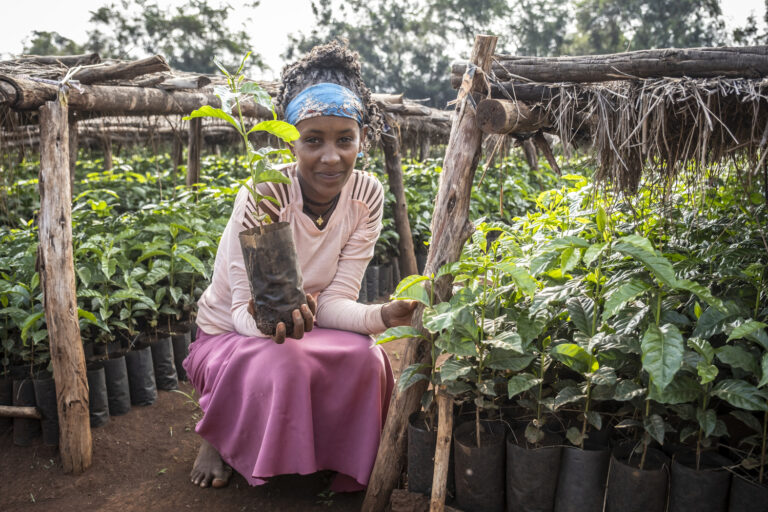
With numerous measures, Menschen für Menschen is discouraging the felling of trees and promoting the protection of these natural resources. Energy-saving stoves, for example – so-called “green stoves” – help the women to save time with their daily tasks. In addition, they reduce the consumption of wood considerably. With extensive forest plantations and closed areas for trees, the Foundation is slowly helping to restore the environment in our project regions. Besides this, specially planted lumber is available to the inhabitants. The planting of indigenous trees consolidates the soil and returns the nutrients.
Our achievements
779
Tree nurseries
305.82
Tree seedlings distributed in millions
323,562
Wood-saving "green" stoves
60,632 km
Constructed terraces and bunds