A forest full of coffee
A part of ethiopian tradition
In Ethiopia, six out of ten people make a living from agriculture. But yields are low – all the more so when the rain does not come. In times of need, many rely on intensive monocultures and cleared trees for more arable land. Both further weaken the already depleted soils. We show people how to manage their land more sustainably and how to strengthen the ecosystem based on the principle of agroforestry. Vegetables also flourish for a balanced diet and farmers can earn additional income from their harvest on the market.
In the shade of the trees
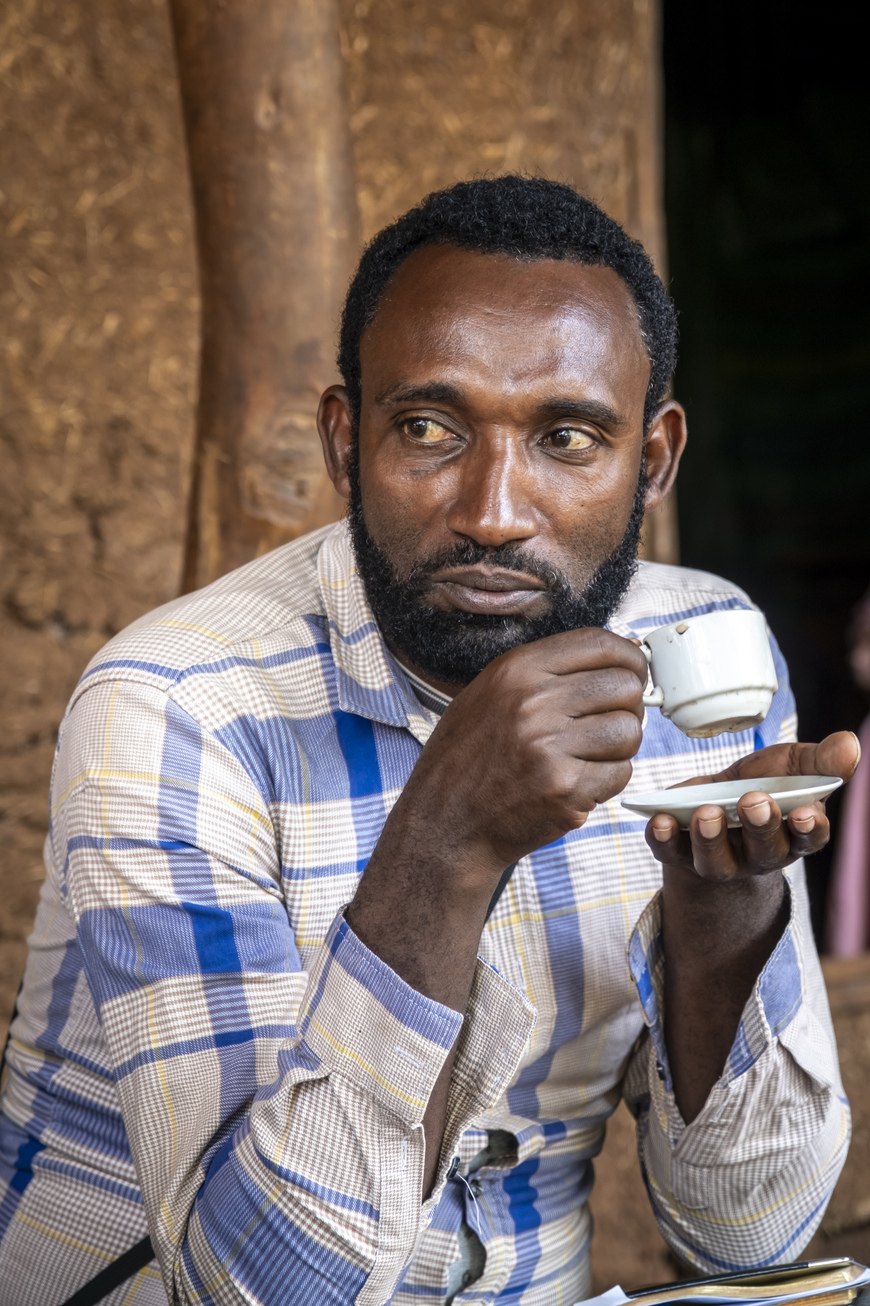
Kelil Diga loves coffee. He drinks it all the time and everywhere he goes: in the morning, in the field, after prayers, in the evening. “I think I’m a bit addicted,” the 59-year-old admits and laughs. Kelil used to buy the beans for the Ethiopian national drink at the market near his home village of Dego, about 270 kilometres southwest of the capital Addis Ababa. Two years ago he was able to taste his own coffee for the first time. “It smelled fantastic and tasted so much better than any other,” he recalls.
The road to this delight was long: for over twenty years, Kelil had tried to grow the Arabica himself. Time and again, he failed. One time, the local government’s agriculture bureau wanted to sell him some seedlings. Kelil prepared part of his farm land and sold two oxen for the necessary cash. Then it turned out that there were notmenough plants available. Another time, the myoung shrubs in the field dried up.
“As well as a lack of seedlings, there is also a lack of knowledge,” says Tadesse Adele. The agricultural expert, who works for Menschen für Menschen, supports farmers in changing their farming techniques and, as a monitoring and evaluation officer, documents their progress. “Kelil had planted the coffee in the middle of his field, without any chance of shade,” explains Tadesse. “The Arabica variety depends on it and there must be enough trees growing on his property.”
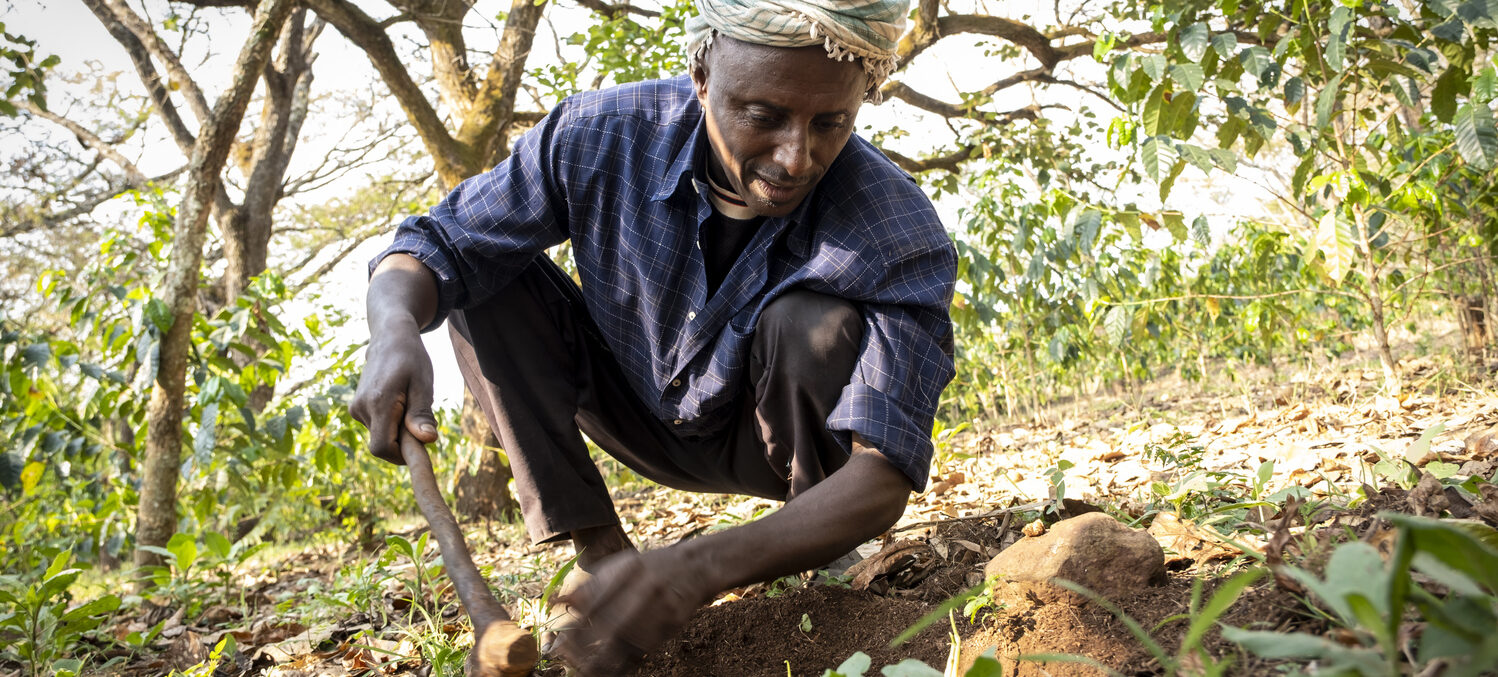
Kelil received coffee seedlings from the Foundation and he learned how to plant them – at the right distance under the protective canopy of his acacias and silky oaks. Ginger is now growing underneath. “We convinced him to use the forest for himself instead of clearing it,” says Tadesse. Because originally Kelil wanted to cut down the trees for the cultivation of corn and sorghum.
It is not only in Nono Benja that Menschen für Menschen is committed to this regenerative form of agriculture. Around 25,000 farmers in the 13 project regions are now growing their coffee in agroforestry systems – together with shade trees, fruit, vegetables and spices. This combination allows the plants to strengthen each other. This protects the soil, promotes biodiversity and increases resilience to climate change.
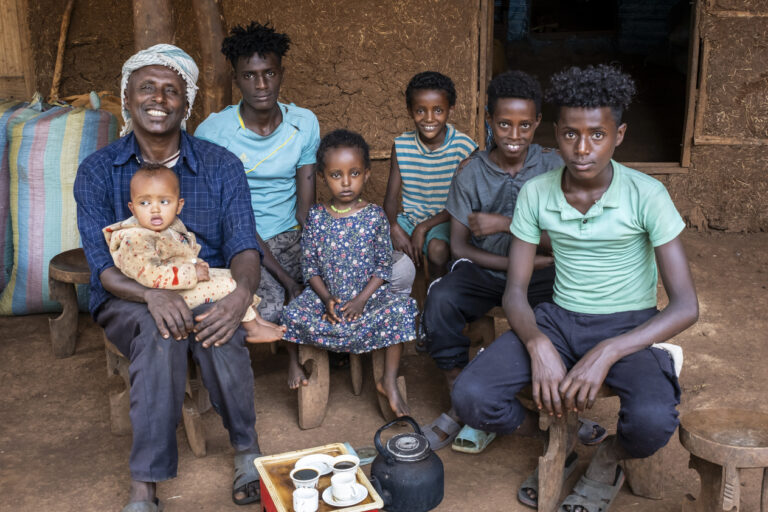
But farmers’ wallets also benefit: today, bags of coffee cherries are lined up on Kelil’s doorstep. Previously, he sold only sorghum; he now offers papayas in addition to ginger and coffee. These seedlings were also provided by the Foundation. This brings him an additional income of 230,000 birr (about €1,270) per year. Money that the family reinvests: in a separate barn, household utensils, soap and food. “We live healthier lives,” says the father of eight. His children regularly eat fruit, fresh ginger tea helps when they are ill, and if something is missing, they can fetch it at the market. Since the Foundation began its activities in the region, the stands have generally offered a richer selection of vegetables andfruit.
In the future, Kelil wants to further expand his coffee production. He wants to save part of the future profit so that he can eventually, he hopes, buy a depulper. It separates the beans from the pulp of the coffee cherry. “Then I could process my coffee myself and sell it for a higher price,” says the farmer. He would also have a name for his coffee company: Namaf Namota – which translates to “people for people”, or “Menschen für Menschen”.
“Coffee farmers are no longer clearing their forests. We give them seedlings of fast-growing tree varieties that they can use for building materials or firewood.”