
Nono Benja
General information
The district, which covers more than 783 km² and comprises 21 municipalities, extends between 1,500 and 2,650 meters above sea level. The almost 107,000 people live mainly from agriculture and livestock farming. In the two rainy seasons, the short one from mid-March to the end of April and the longer one from June to September, between 800 and 1,500 mm of rain fall per year. The main town in the district is Alga.
Project start: 2020
Area: 783 km²
Population: approx. 107,000
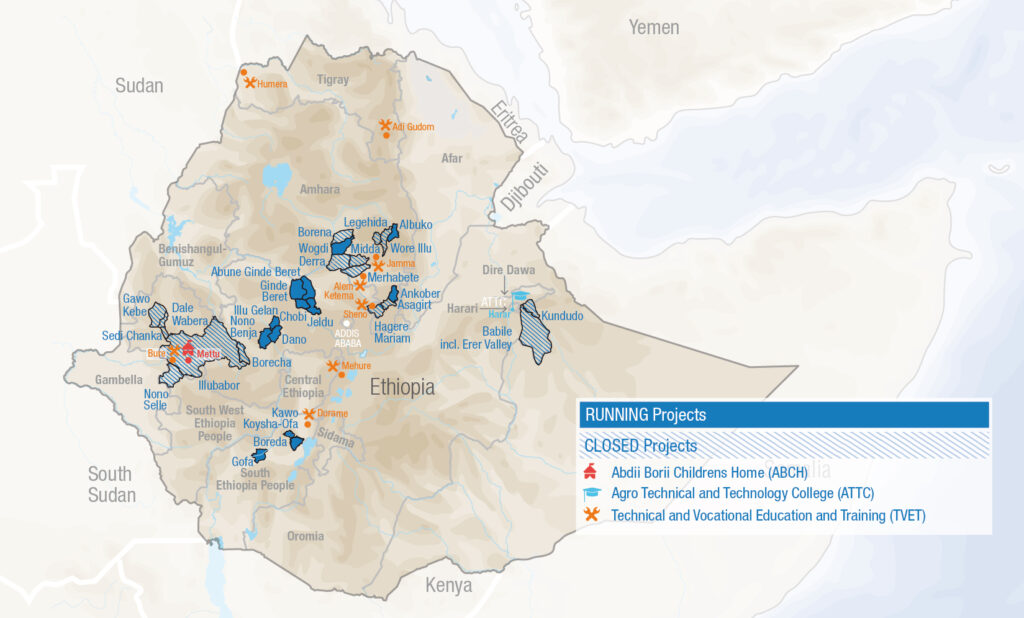
Location: 275 kilometres south-west of Addis Ababa
Initial situation before the start of the project
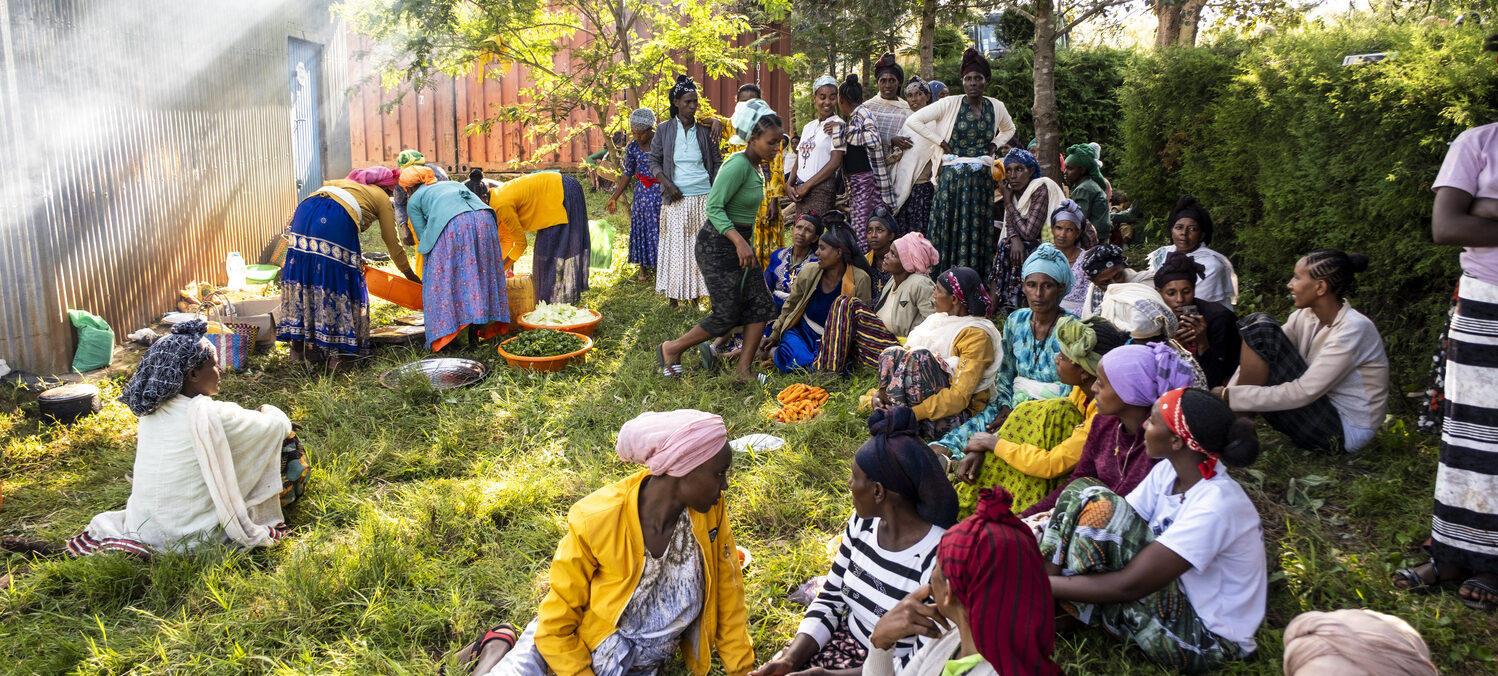
Only 36 per cent of the population has access to clean drinking water, resulting in stomach and intestinal diseases. As is common in Ethiopia, women and girls are responsible for collecting wood and water, which keeps them busy for a large part of the day. Girls are therefore often unable to attend school. Most of the school buildings in the project area are made of wood and clay and are in very poor condition. There are hardly any school books.
Treatment options in the existing poorly equipped medical facilities in Nono Benja are limited. Women participate in economic and social life, but are traditionally disadvantaged. They bear the main burden in the household, but have little say in decision-making and are unable to generate their own income due to a lack of capital.