
The bee's gold
Project area: Dano
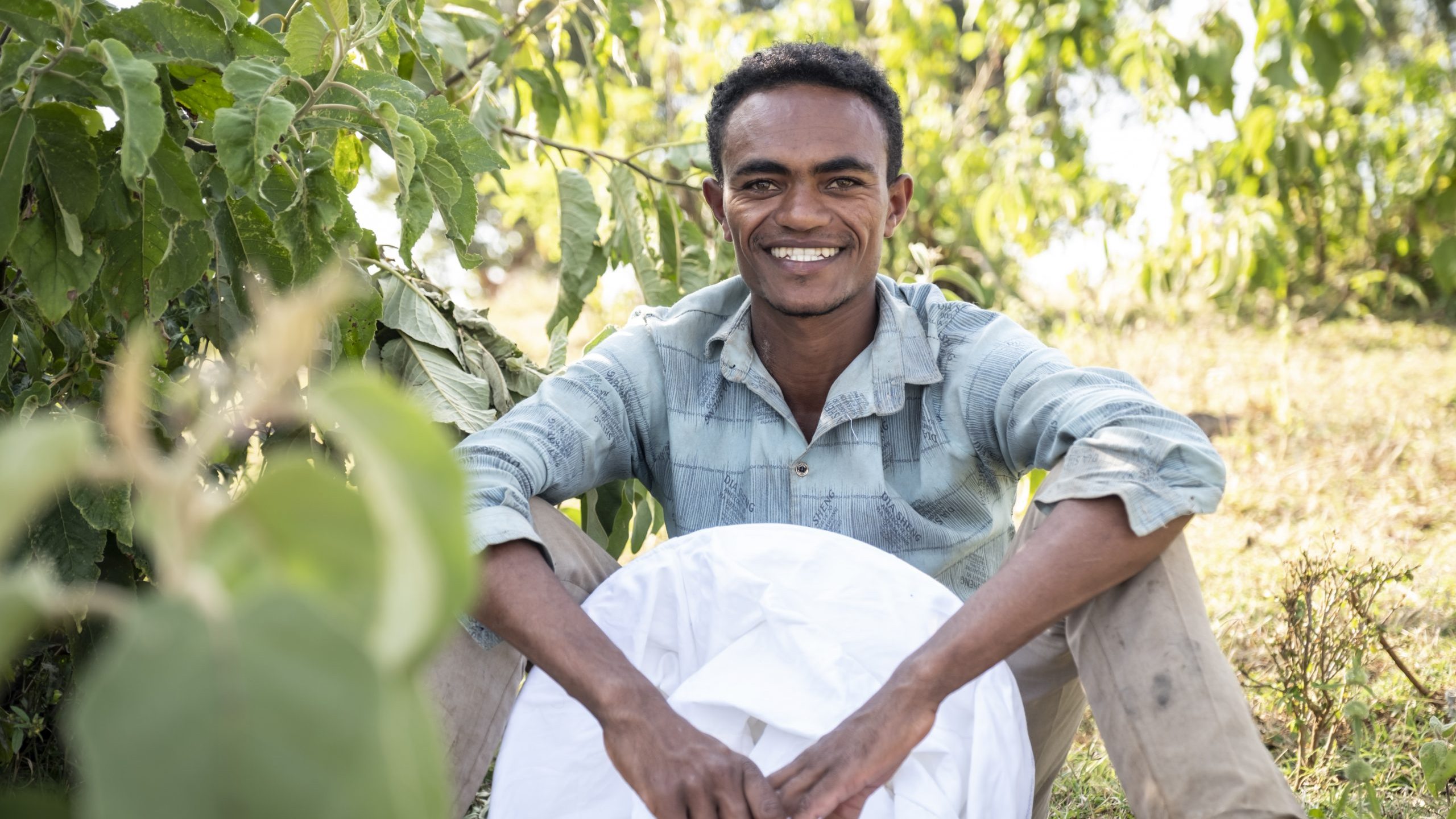
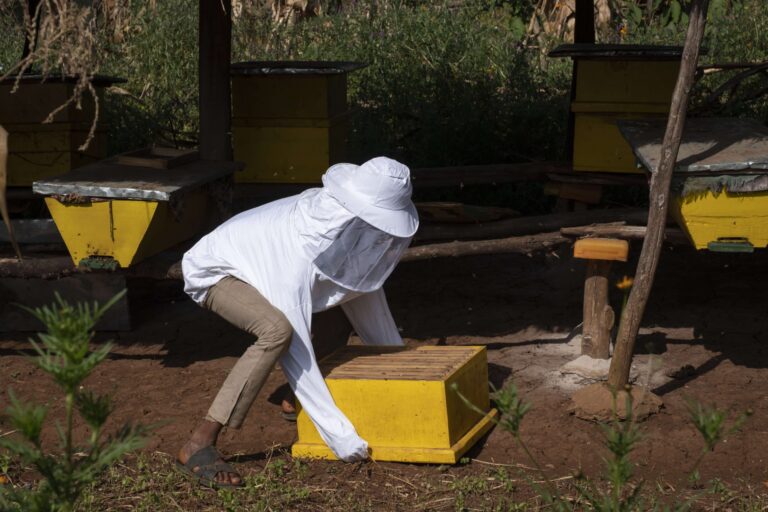
Shuguti walks slowly along the hives. He checks whether termites, spiders or ants have collected anywhere – the natural enemies of his bees. A beekeeper’s jacket protects him. The thin 22-year-old received it from the foundation after a training course in beekeeping.
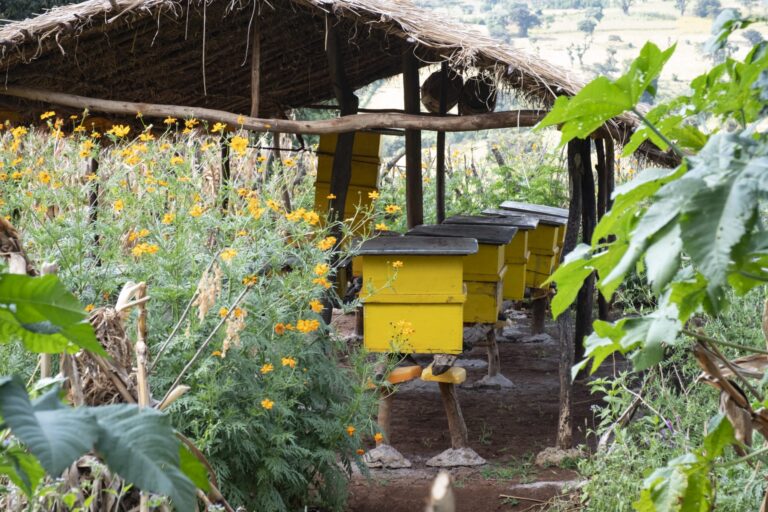
Shuguti will sell this to cooperatives in the Green Innovation Centre in Seyo: one of them processes the honey further, other young entrepreneurs put it in jars and a different company markets it. Menschen für Menschen, together with the German Society for International Cooperation (GIZ), brought the centre to life in the small town in the Dano project area in 2015. In this area Niger seed, maize and soya beans thrive particularly well, yet up until now these raw materials have hardly at all been processed by the farmers living here. Wholesalers buy them at a very favourable price and transport them off. The centre serves to prevent this sucking off of profits: the goal instead is to build up value chains locally and to create income for the many unemployed young people.
So far more than 400 women and men have organised themselves into start-ups. In the foundational phase they received start-up capital and machines. In training sessions, they learned how they can process honey, produce animal feed and make valuable oil from Niger seeds. In the meantime, the cooperatives work independently. “Now we want to offer even more people prospects and to further build up the production of honey and animal feed.” That’s how Tesfalidet Gebrekidan, deputy manager of the Dano project area, describes the goal of the second project phase, which runs until 2021 and aims to reach a further 800 women and unemployed young people.
In Shuguti’s community alone the charity has trained 37 young beekeepers. Like him they supply it to the cooperatives in Seyo, and several times a week are still visited by the charity’s development assistants. “Especially for people who possess little or no farmland of their own, beekeeping is a good way of making an income,” says Tesfalidet.
He left school after year three so as to help his family in the fields. He is proud of the fact that as someone who is illiterate, he can learn a profession in the charity’s training sessions. “Earlier I tried to get honey somehow, today I’m a professional beekeeper,” says Shuguti grinning. He has a two-year-old son. “Elias should learn to read, write and add up and later go on to study,” he says. “I’m going to work hard for his future.” The bees will help him.